
 中文简体
 English
 русский

Content
- 1 What ASTM A105 Actually Covers
- 2 Chemical Composition of ASTM A105
- 3 Mechanical Properties and What They Mean in Service
- 4 A105 or A105N: The Heat Treatment Question
- 5 Where A105 Components Are Used
- 6 Forged A105 versus Cast Carbon Steel for Valve Bodies
- 7 How A105 Sits Among Neighbouring Grades
- 8 Verifying Quality Before You Buy
- 9 Common Buying Mistakes
- 10 Frequently Asked Questions
ASTM A105 appears on countless valve and flange drawings, yet it remains one of the most frequently misapplied carbon steel grades we see in incoming enquiries. It is not a pipe specification, it is not a casting grade, and the letter N that sometimes follows it changes how the finished part behaves in service. Having machined and pressure-tested a great many A105 valve bodies over the years, we have noticed that most problems trace back to a simple mismatch between what the drawing says and what the line actually demands.
This guide walks through the specification the way we discuss it with engineers and buyers across the table, from chemical limits to the practical question of when a forging is the right choice and when a casting makes more sense.
What ASTM A105 Actually Covers
ASTM A105/A105M is titled Standard Specification for Carbon Steel Forgings for Piping Applications. Every word in that title matters. It covers forged components, not pipe, and not castings. Typical product forms include flanges, forged fittings, tees, elbows, couplings, unions, and forged valve bodies, all produced by heating a solid billet and shaping it under pressure rather than pouring it into a mould.
That production route is the reason A105 behaves the way it does. Forging works the metal, refines the grain and closes internal porosity, which gives the finished component a dense, uniform structure that machines cleanly and holds a seal well. It is also why A105 is popular for smaller, higher-pressure valve bodies where wall thickness and integrity matter more than shape complexity.
In pressure-temperature terms, A105 components are commonly applied from about -29 °C up to 425 °C, depending on the governing standard and the rating class being used. Push beyond that envelope in either direction and you should be looking at a different grade.
Chemical Composition of ASTM A105
The specification keeps the chemistry deliberately simple, but the limits are tight enough that a genuine forging and a plate-cut imitation are not interchangeable.
| Element | Requirement |
|---|---|
| Carbon (C) | 0.35 max |
| Manganese (Mn) | 0.60 – 1.05 |
| Phosphorus (P) | 0.035 max |
| Sulfur (S) | 0.040 max |
| Silicon (Si) | 0.10 – 0.35 |
| Copper (Cu) | 0.40 max |
| Nickel (Ni) | 0.40 max |
| Chromium (Cr) | 0.30 max |
| Molybdenum (Mo) | 0.12 max |
| Vanadium (V) | 0.08 max |
| Cu + Ni + Cr + Mo + V | 1.00 max |
Two details in the fine print are worth flagging. Residual elements are capped individually and as a sum, which protects weldability and toughness from scrap contamination. Separately, for each 0.01% reduction of carbon below the 0.35% maximum, a manganese increase of 0.06% is permitted, up to 1.35% maximum. That allowance lets a mill balance strength and hardenability without breaking the carbon ceiling.
Mechanical Properties and What They Mean in Service
| Property | Requirement |
|---|---|
| Tensile strength | 485 MPa (70 ksi) min |
| Yield strength | 250 MPa (36 ksi) min |
| Elongation in 50 mm | 22% min |
| Reduction of area | 30% min |
| Hardness | 187 HBW max |
The hardness ceiling is the number we watch most closely on the shop floor. It is not there to make life difficult for the machinist; it is a practical guard against a forging that has cooled too quickly and become brittle. When a customer specifies a lower hardness cap for wet or mildly sour service, that is a signal to control the heat treatment route rather than simply to test harder.
A105 or A105N: The Heat Treatment Question
Plain A105 may be supplied in the as-forged condition or after heat treatment, depending on what the purchase order asks for. The N suffix removes that choice: A105N requires the forgings to be normalized, meaning they are heated above the critical temperature and cooled in still air.
The strength figures stay essentially the same, so the difference is not about how strong the part is, but about how consistently it behaves. Normalizing refines the grain structure, evens out hardness across a thick section, and improves toughness, particularly at lower temperatures. In our experience the N designation earns its keep when the component sees impact loading, when the section is heavy, when low-temperature impact testing is specified, or when the part will be welded into a critical line. For a straightforward, warm-service water valve body, standard A105 is often perfectly adequate and saves a process step.
Where A105 Components Are Used
The specification suits carbon steel pipework carrying non-aggressive media at moderate temperature, which covers a surprising amount of industrial ground:
- Oil and gas gathering, processing, manifolds and wellhead skids
- Power generation, including steam and feedwater systems
- Chemical and petrochemical plants on carbon steel lines without aggressive corrosion duty
- Water distribution, pumping stations and fire protection networks
- General industrial piping where a forged, weldable component is preferred over a casting
A105 is a carbon steel, so it corrodes like one. In coastal, marine or chemical environments it needs a coating, a lining, or replacement by a stainless grade rather than optimistic specification.
Forged A105 versus Cast Carbon Steel for Valve Bodies
This is the comparison that comes up most often in valve selection. A105 forged bodies are typically the better answer for smaller sizes and higher pressures: the worked structure gives consistent wall thickness, good toughness and reliable sealing surfaces, and the body can be made compact. The trade-offs are a size ceiling and higher machining cost, since a forging is closer to a block of material than to a finished shape.
Cast carbon steel such as A216 WCB takes over as diameters grow. Casting handles complex internal geometries, reduces material waste, and brings the cost per unit down considerably at larger sizes. If your line is a DN300 isolation point on a water main, a cast steel gate valve is the sensible economic choice.
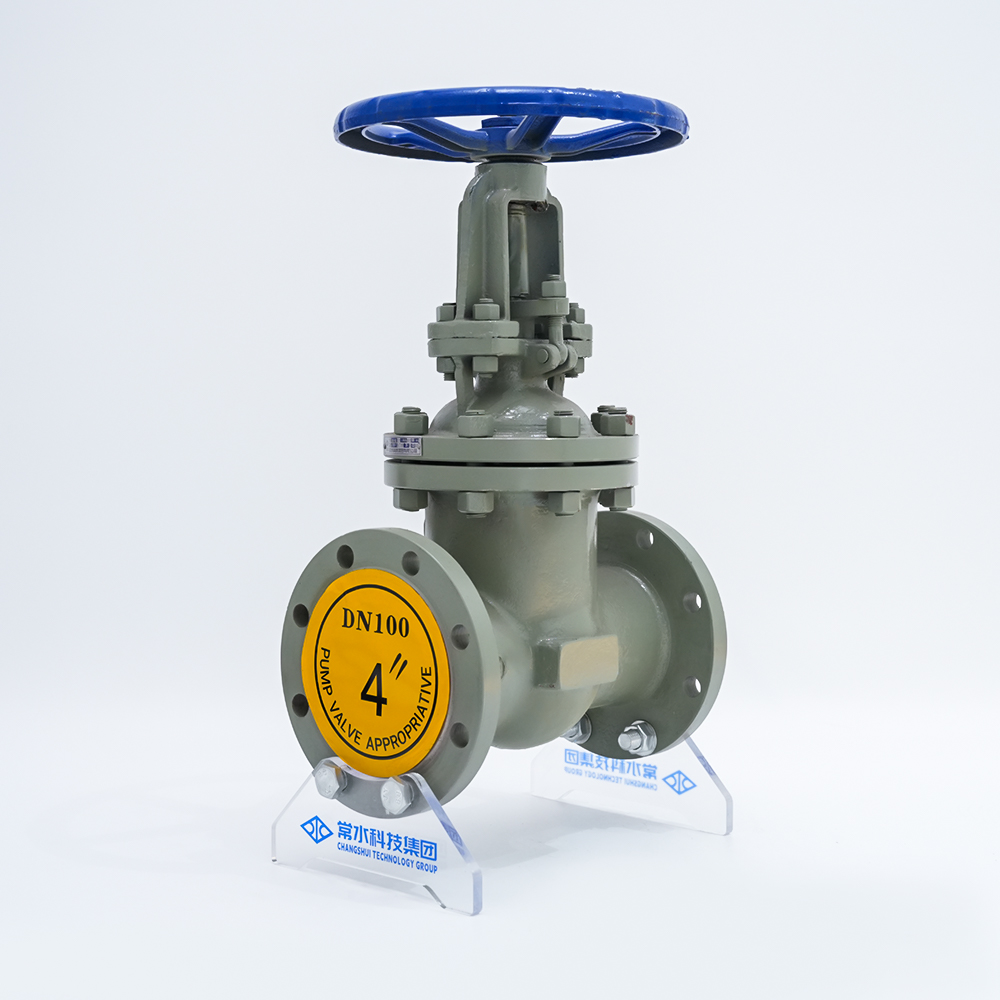 Cast Steel Flange Gate Valve Z41H-16CFor larger isolation points such as DN300 water mains, this cast steel gate valve offers PN16–64 service and manual, geared, electric, or pneumatic actuation.View Product →
The practical rule we offer customers is straightforward: match the body construction to the size, pressure class and consequence of failure, not to habit. A specification copied from an old project is a common source of either over-spend or under-protection.
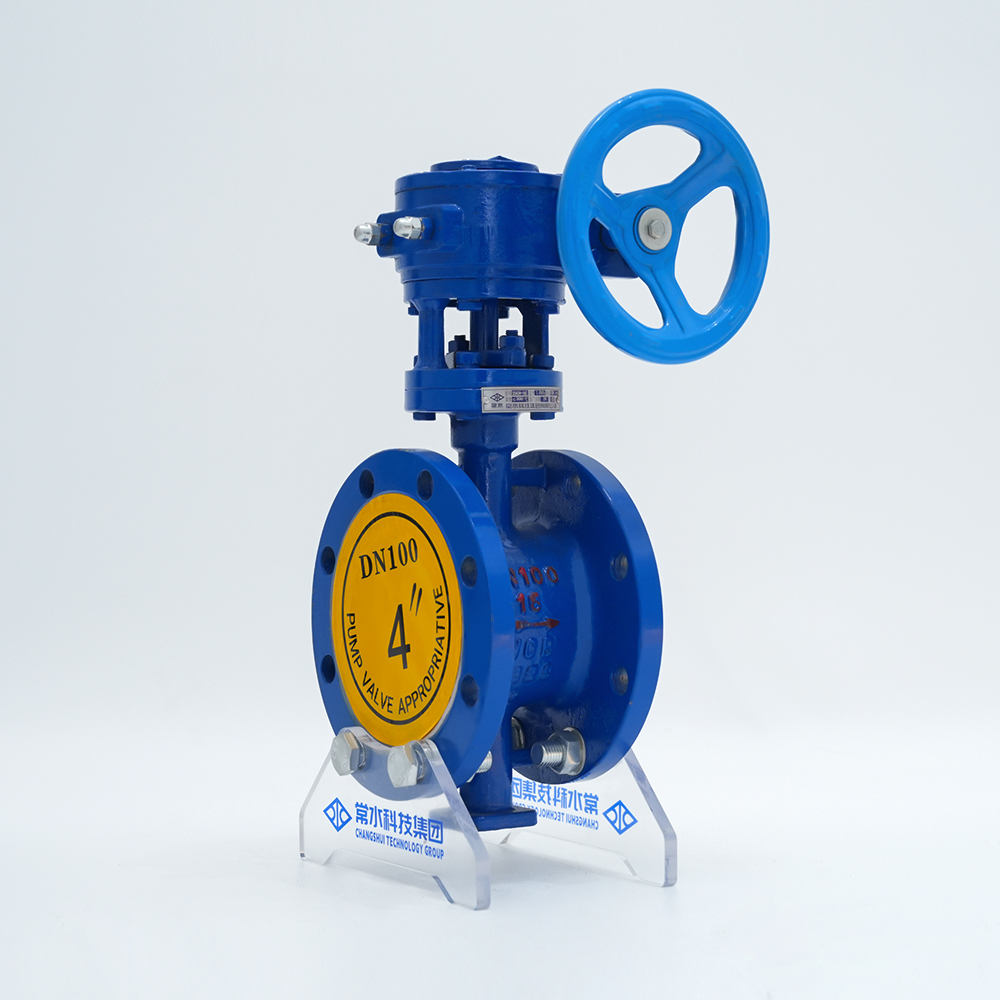 Cast Steel Flange Butterfly Valve D343H-16CThree-way eccentric cast steel butterfly valve with elastic or metal sealing, 90-degree operation, and pneumatic or electric actuation for regulating and isolating industrial media.View Product →
Where the medium turns corrosive, neither carbon steel option survives indefinitely, and a forged stainless grade such as A182 F304 or F316 becomes the starting point instead.
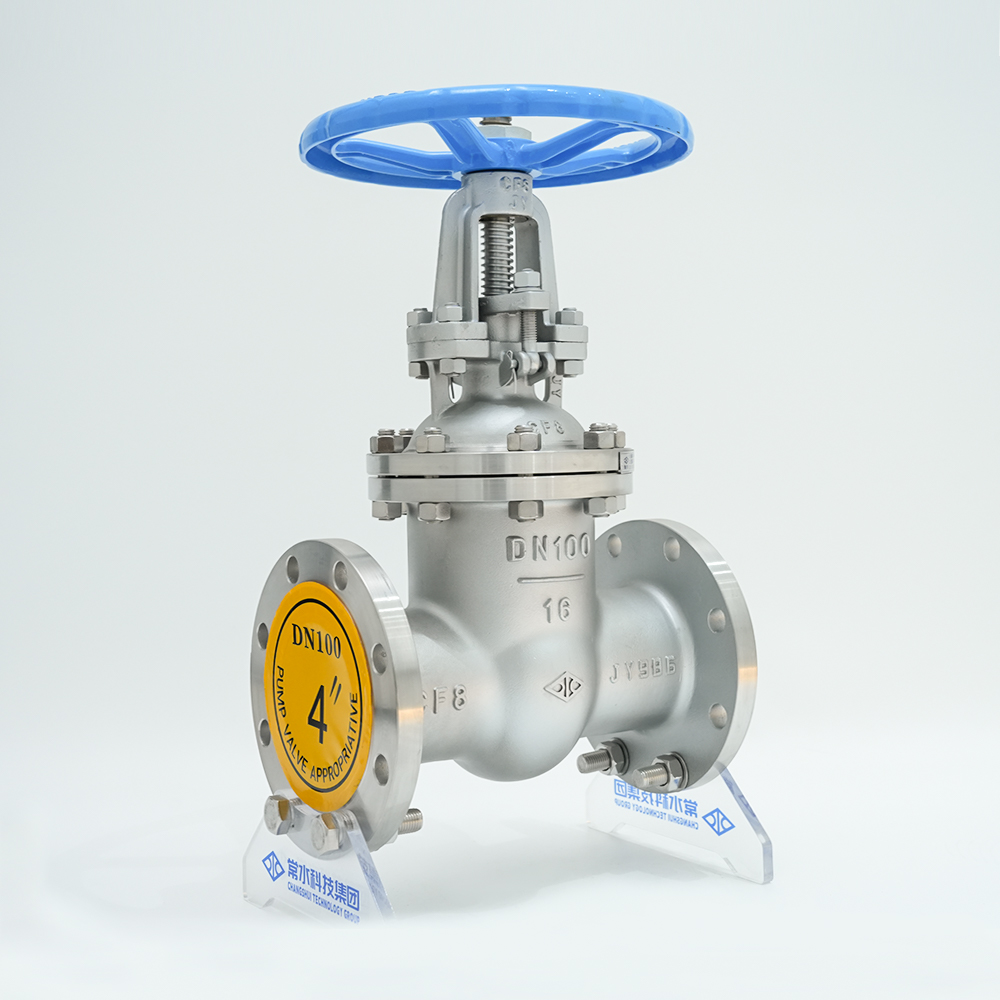 Stainless Steel Flange Gate Valve Z41W-16PFor flanged water service where stainless construction is preferred, this 304 gate valve covers DN15–600 and offers flexible wedge design with selectable materials.View Product →
How A105 Sits Among Neighbouring Grades
| Grade | Product form | Typical service |
|---|---|---|
| A105 / A105N | Forgings | General carbon steel piping, -29 °C to 425 °C |
| A106 | Seamless pipe | Pipe, not components |
| A216 WCB | Castings | Cast valve bodies and large fittings |
| A350 LF2 | Forgings | Low-temperature duty down to about -46 °C |
| A182 F304 / F316 | Forgings | Corrosive or high-purity service |
Confusing A105 with A106 is probably the single most common error we see on drawings, and it usually surfaces late, when a fitting has already been ordered against the wrong document. For a closer look at the forged stainless family, our engineers have written a separate piece on A182 material grades and valve selection.
Verifying Quality Before You Buy
A certificate is only useful if it can be tied to the metal in the crate. Insist on an EN 10204 3.1 mill test report, then check that the heat number on the report matches the marking on the component itself, not just the label on the box. Confirm the carbon equivalent where welding will be involved, review the hardness result against both the specification and your own project requirement, and ask whether non-destructive examination such as ultrasonic or magnetic particle testing was performed on the forging.
Dimensional checks matter too: flange facing, drilling template, face-to-face length and thread form all cause expensive rework when they are wrong. Our own quality process runs from incoming chemistry through to hydrostatic testing, and the supporting documents are available for review in our certification section.
Common Buying Mistakes
- Treating A105 as a pipe grade and ordering pipe against it
- Overlooking the N suffix when impact testing or low-temperature service is specified
- Accepting a photocopied test report with no heat number traceable to the part
- Buying plate-cut or cast lookalikes where a genuine forging was required
- Specifying low-temperature impacts on warm-service lines and paying for tests nobody needs
Frequently Asked Questions
Is ASTM A105 the same as A106?
No. A106 covers seamless carbon steel pipe, while A105 covers forged piping components such as flanges, fittings and valve bodies.
Can A105 be welded?
Yes. It welds readily with suitable preheat, low-hydrogen consumables and a qualified procedure. Controlling the carbon equivalent and any post-weld heat treatment requirement keeps the heat-affected zone sound.
Is A105 suitable for low-temperature service?
Its usual lower limit is around -29 °C. Below that, A350 LF2 or an impact-tested A105N forging is the more defensible choice.
Does A105N cost more?
Usually a little, because normalizing adds a furnace cycle and testing time. The premium is small next to the cost of a toughness-related failure.
ASTM A105 is a dependable, well-understood grade, and that is precisely why it gets specified so casually. Read the title of the specification carefully, decide whether the N is genuinely needed, match the body construction to the duty, and verify the paperwork against the parts. Do those four things and the material will quietly do its job for decades, which is exactly what a good carbon steel component should do.