
 中文简体
中文简体 English
 русский
Content
- 1 What "A182 Material" Really Covers
- 2 The A182 Grade Family at a Glance
- 3 Chemical and Mechanical Requirements That Matter
- 4 F304, F316, and F316L: The Choice Most Projects Face
- 5 A182 Material in High-Temperature Service
- 6 A182 versus Cast Steel and Ductile Iron
- 7 A182 Material in Real Valve Projects
- 8 How to Specify A182 Material on a Purchase Order
Ask five people on the same piping job what "A182 material" means, and you will usually get five answers, most of them only partly right. In day-to-day engineering talk, A182 is shorthand for ASTM A182/A182M, the specification that covers forged or rolled alloy steel and stainless steel pipe flanges, forged fittings, and valves and parts for high-temperature service. It is not one metal. It is a whole family of grades marked with an "F" prefix, running from plain carbon steel through chrome-molybdenum alloys to austenitic stainless steels. Knowing which grade sits behind a line number on a drawing is often the difference between a valve that quietly serves for decades and one that starts weeping after the first thermal cycle.
What "A182 Material" Really Covers
The most important thing to remember is that A182 is a product-form specification. It governs forgings and rolled parts, not castings and not plate. That single fact settles a lot of arguments on site. If a component is cast, it belongs to another family, such as A216 for carbon steel castings, A217 for alloy steel castings, or A351 for austenitic stainless steel castings. If a carbon steel forging is headed for ambient or low-temperature duty, A105 or A350 LF2 is normally the correct call instead.
The specification covers flanges, forged fittings, valves, valve parts, and similar forged components, and it works alongside the standards that fix shape and rating. ASME B16.5 handles flange dimensions and pressure-temperature tables, while ASME B16.34 does the same job for valves. A182 decides the material; those standards decide what the finished part looks like and how much pressure it may carry. ASME SA-182 is the ASME equivalent of the same specification, published in Section II, Part A of the ASME Boiler and Pressure Vessel Code, so drawings often use A182 and SA-182 interchangeably.
The A182 Grade Family at a Glance
Grade letters follow a simple logic. The "F" stands for forging, the number identifies the alloy family, and a class number, where it appears, marks a different heat treatment or strength level for the same chemistry. F11 Class 2 and F22 Class 3, for instance, are stronger versions of their base grades.
| Grade | Alloy family | Typical minimum tensile strength | Where it usually turns up |
|---|---|---|---|
| F1 | Carbon steel | 485 MPa (70 ksi) | General piping flanges and fittings at moderate temperature |
| F5 | 5Cr-0.5Mo martensitic | 485 MPa (70 ksi) | Refinery and petrochemical lines with mild elevated-temperature duty |
| F9 | 9Cr-1Mo martensitic | 585 MPa (85 ksi) | High-temperature refinery and power piping |
| F11 Class 2 | 1.25Cr-0.5Mo | 485 MPa (70 ksi) | Steam headers, power plant piping, valve bodies |
| F22 Class 3 | 2.25Cr-1Mo | 690 MPa (100 ksi) | Hydroprocessing and high-pressure steam service |
| F91 | 9Cr-1Mo-V | 585 MPa (85 ksi) | Supercritical boilers and main steam lines |
| F304 / F304L | Austenitic 18Cr-8Ni | 515 / 485 MPa | General corrosive service and moderately cold duty |
| F316 / F316L | Austenitic 16Cr-12Ni-2Mo | 515 / 485 MPa | Chemical, coastal, and chloride-bearing systems |
| F321 / F347 | Stabilized austenitic | 515 MPa (75 ksi) | Hot service where sensitization is a concern |
| F51 | Duplex stainless steel | 620 MPa (90 ksi) | Chloride-rich water and offshore piping |
The tensile values above are typical minimum levels shown for orientation only. The current edition of the standard and the specific class always govern, so confirm both before a purchase order is released.
Chemical and Mechanical Requirements That Matter
The specification pins down far more than chemistry. Each grade carries a heat analysis range for carbon, manganese, silicon, phosphorus, sulfur, chromium, nickel, and molybdenum, plus limits on elements such as copper, titanium, niobium, nitrogen, and vanadium where they apply. Mechanical requirements then cover tensile strength, yield strength at 0.2 percent offset, elongation, reduction of area, and hardness for the ferritic and martensitic grades.
Heat treatment is written into the standard rather than left to the workshop. F1 is normally annealed. The chrome-molybdenum grades are normalized and tempered, and F91 needs carefully controlled normalizing and tempering to develop its creep resistance. Austenitic grades are solution annealed and rapidly cooled, except for the H variants, which are deliberately held to a higher carbon range for elevated-temperature strength. Supplementary requirements add optional extras such as impact testing, hardness surveys, or radiographic examination of welds on built-up parts, and they change both cost and lead time.
F304, F316, and F316L: The Choice Most Projects Face
Among the stainless grades, F304 and F316 do most of the work, and the difference between them looks small on paper but matters in service. Both are austenitic, both offer comparable tensile strength, and both machine and weld in much the same way. F316 carries roughly two to three percent molybdenum, and that addition is what lifts its resistance to pitting and crevice corrosion in chloride-bearing environments.
The L suffix marks a low-carbon version with a carbon ceiling of 0.030 percent. Lower carbon reduces the risk of sensitization, the chromium-depletion effect that can leave grain boundaries vulnerable after welding or hot work. The trade-off is slightly lower yield strength, so the reduced values must still satisfy the pressure-temperature rating. On chemical plants, coastal installations, and pharmaceutical systems, F316L is often the default answer for wetted parts, while F304 stays a sensible and economical choice for less aggressive media. Our article on 304 versus 316L stainless steel for valves walks through the selection points in more detail.
A182 Material in High-Temperature Service
High-temperature duty is the reason the specification exists, and it is where grade selection becomes a question of strength and life rather than corrosion. Ferritic and martensitic grades are the workhorses of steam and process piping: F11 for conventional steam headers and valve bodies, F22 where pressure climbs, and F91 for supercritical boilers, where a 9 percent chromium content with vanadium and niobium delivers creep strength that older grades cannot match.
Austenitic grades take over beyond roughly 540 to 565 degrees Celsius, or when oxidation resistance becomes the limiting factor. The stabilized grades, F321 with titanium and F347 with niobium, are chosen specifically to resist sensitization during long hot service. Thermal expansion deserves attention too, because austenitic stainless steel grows noticeably more than chrome-moly, which affects supports, clearances, and dissimilar-metal welds. For valves, the grade never stands alone: ratings come from ASME B16.34, and the material grouping in that standard decides how much pressure a body may carry at a given temperature.
A182 versus Cast Steel and Ductile Iron
Not every valve body should be forged. Cast steel grades such as A216 WCB, A217 WC6 and WC9, and A351 CF8 and CF8M allow complex internal shapes, larger sizes, and lower unit cost in heavy sections. Forged A182 parts bring a finer and more uniform grain structure, better toughness, and no risk of internal shrinkage porosity, which is why forged bodies dominate small-bore and high-pressure valve designs.
The practical split usually looks like this. Ductile iron, made to a different specification altogether, handles water, wastewater, HVAC, and fire protection systems where temperatures stay moderate and the medium is not aggressive. Cast steel covers the broad middle of industrial valve demand. Forged A182 material takes over where pressure class, size, or criticality makes the extra cost worthwhile. When a cast steel body is the better economic fit, a cast steel flange gate valve such as our 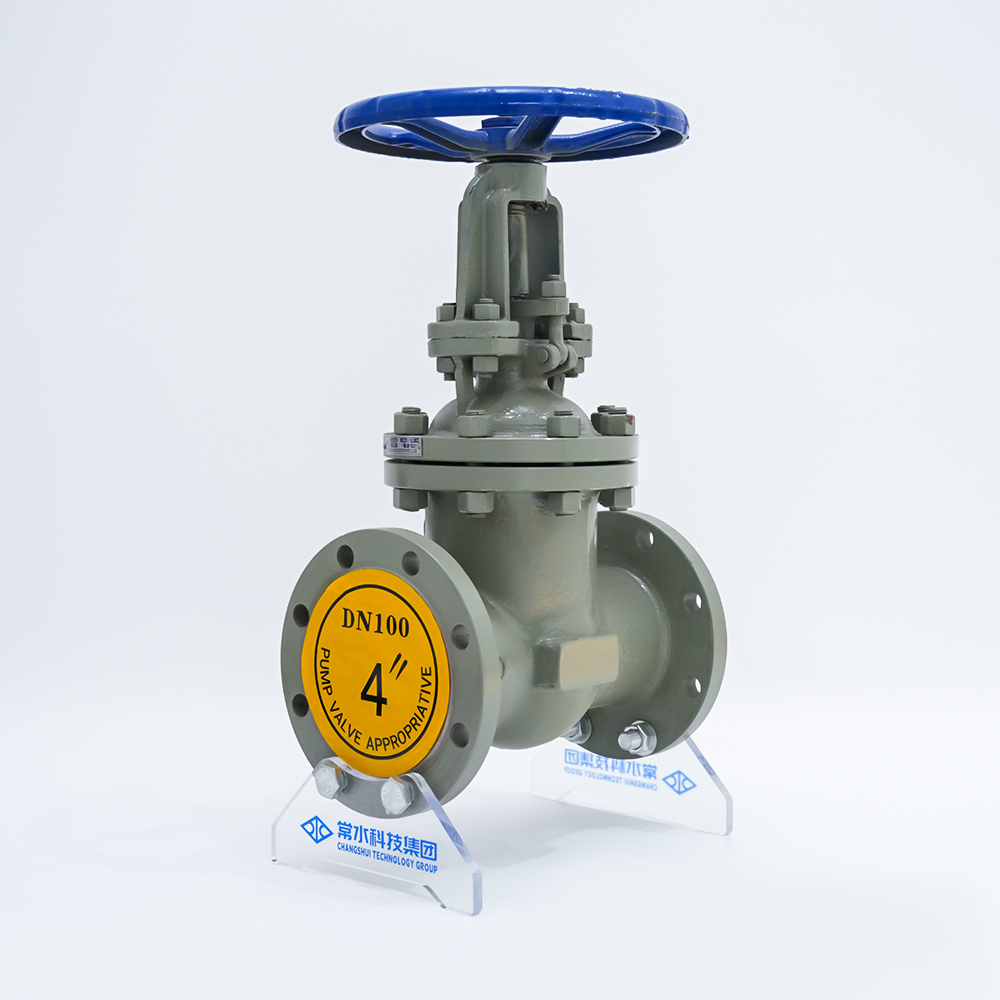 Cast Steel Flange Gate Valve Z41H-16C1. The fluid resistance is small, and the sealing surface is less brushed and eroded by the medium.View Product → is a common starting point for general steam and water lines in the 16 bar class.
A182 Material in Real Valve Projects
In valve work, A182 grades turn up most often in forged bodies and bonnets for small-bore gate, globe, check, and ball valves, in forged flanges welded onto pipe spools, and in trim parts such as stems and discs where a specific corrosion or temperature resistance is required. A typical specification reads something like "body and bonnet ASTM A182 F316, trim F316 with hard-faced seating surfaces," and that same grade line is repeated on the test certificate.
Because forged stock arrives as bar and near-net shapes, sizes are naturally limited. Above roughly a four-inch bore, cast or fabricated bodies usually become more practical and the material shifts toward A216 or A351. Below that, forged construction gives a compact, high-strength body that handles thermal cycling well. Where a project calls for a stainless steel gate valve with flanged ends, our 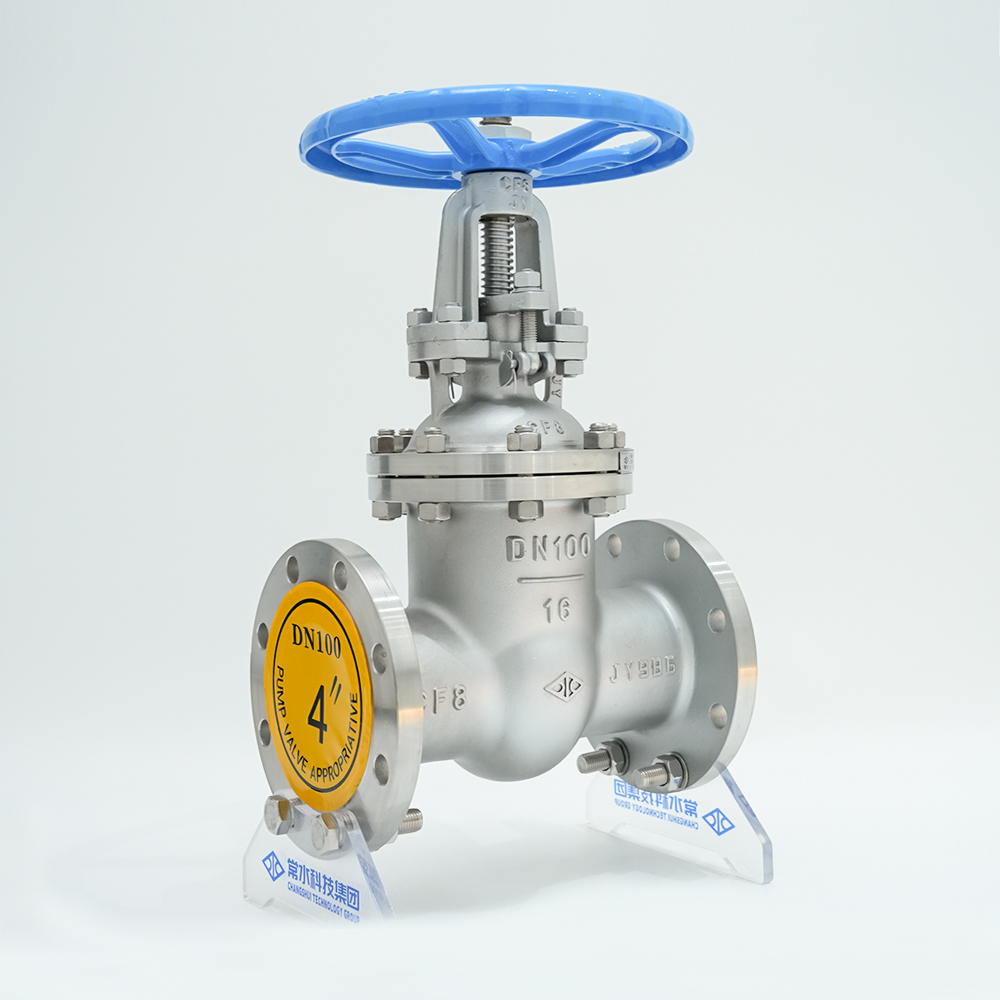 Stainless Steel Flange Gate Valve Z41W-16P1.0/1.6/2.5/4.0/6.4/10MPaView Product → is built around the F304 and F316 family of austenitic grades.
How to Specify A182 Material on a Purchase Order
A purchase order that says only "A182" leaves far too much open, and the gaps usually surface after delivery. These are the details worth locking down before a quote is issued.
- Grade and class, written out in full: F316L, F22 Class 3, or F91, never just A182.
- Product form and the governing dimensional standard, for example forged flanges to ASME B16.5 or valves to ASME B16.34.
- Heat treatment condition and any supplementary requirements such as Charpy impact testing.
- Required documentation: an EN 10204 3.1 mill test certificate, positive material identification, and hardness results where relevant.
- Marking and traceability expectations, so the heat number stamped on the part matches the certificate.
- The operating medium, temperature, and pressure class, so the supplier can confirm the grade is genuinely suitable.
Skip any of these and a project can end up with paperwork that matches the specification sheet but not the service conditions. On small-bore stainless lines that need a quarter-turn isolation point, a stainless steel flange ball valve such as our 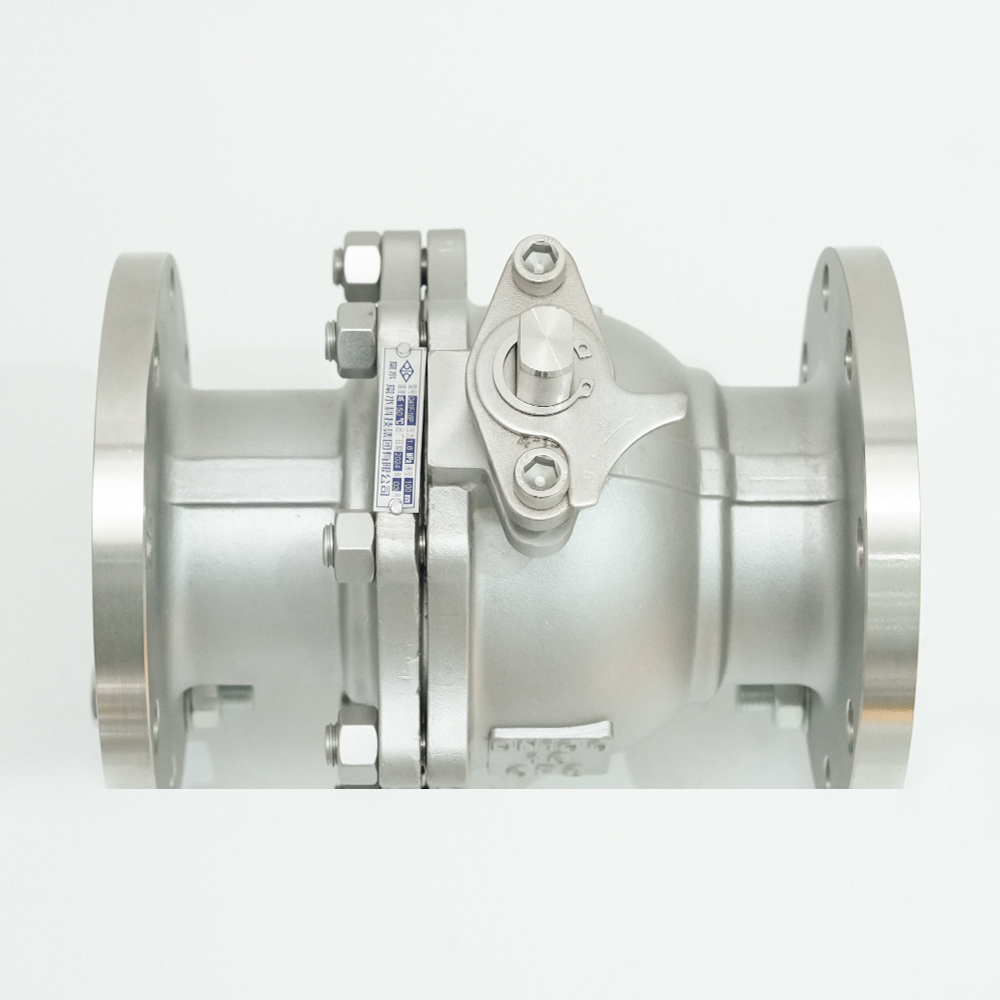 Stainless Steel Flange Ball Valve Q41F-16PIt is used in the management of various working conditions such as petroleum, chemical industry, pharmaceutical, fertilizer, power industry, etc. to cut off or connect...View Product → covers the media that F304 and F316 grades are normally specified for.
Material specifications are not the most glamorous part of a valve project, but they are one of the few things you cannot correct after installation. At Changshui Technology Group, we have spent years matching grades to service conditions across building services, heating, water supply, oil, chemical, and power applications, and we are always glad to talk through a specification before an order is placed. Give us a line number, a medium, and a pressure class, and we will help you confirm that the A182 grade behind it is the right one.