
 中文简体
中文简体 English
 русский
Content
If a specification on your desk asks for a valve with a particular "API 598 leakage class", you have met one of the most common pieces of shorthand in the valve industry. API 598 does not actually publish leakage classes. What it publishes is a test programme: how to carry out shell, backseat and closure tests, how long each test should be held, and how much leakage a metal-seated valve may show before it is rejected. The familiar Class I to Class VI language belongs to ANSI/FCI 70-2 and IEC 60534-4, and the lettered leakage rates belong to ISO 5208 and EN 12266-1. We are Changshui Technology Group (CSHUValve), and we test ductile iron, cast steel, stainless steel, lined and copper valves against these documents every week. The notes below explain what API 598 really requires, where the leakage class numbers come from, and how to write a specification that gets you the tightness you need without paying for tightness you do not.
What API 598 Actually Covers
API STD 598, Valve Inspection and Testing, is a supplementary standard rather than a product standard. It sets out visual examination, shell testing, backseat testing and closure (seat) testing, and it is called up by product standards such as the API 600, API 602, API 603, API 609 and API 6D families. That is why a cast steel gate valve, a ductile iron butterfly valve and a stainless steel check valve can all be "tested to API 598" even though they are designed to different rules.
Two very different acceptance criteria run side by side inside the document:
- No visible leakage at all applies to shell tests, backseat tests, and closure tests on valves with resilient or soft seats.
- A tabulated allowable leakage rate applies to closure tests on metal-seated valves, where a perfect seal is not achievable at every pressure and size.
Almost every argument about "leakage class" starts with someone applying the second criterion to a valve that falls under the first, or the other way round.
The Three Pressure Tests and What They Prove
The three tests answer three different questions: does the pressure boundary hold, can the packing be replaced while the line is under pressure, and does the seat actually shut off?
| Test | Medium | Test pressure | Acceptance criterion |
|---|---|---|---|
| Shell test | Water, or air and inert gas by agreement | 1.5 x the 38 C pressure rating | No visible leakage |
| Backseat test | Water or air | 1.1 x the 38 C pressure rating | No visible leakage |
| Closure test, soft seat | Water, or gas when specified | 1.1 x the 38 C pressure rating | No visible leakage during the hold time |
| Closure test, metal seat | Water, or gas when specified | 1.1 x the 38 C pressure rating | Leakage within the rate allowed for that size and medium |
Hold times rise with nominal size, and the standard's tables govern them for each test and each size band, so a DN50 valve is not held for the same time as a DN600 valve. The closure test is the one that changes character with the seat material, and that is the subject of the next section.
Metal Seats, Soft Seats and Where the Numbers Come From
For resilient-seated valves - ductile iron butterfly valves with EPDM or NBR seats, rubber-disc check valves, and the soft-seated gate valves used across water supply and HVAC networks - API 598 works out as a zero-leakage rule. A single drop of water or one bubble during the closure test is a failure. This is why these designs are so often the simplest way to reach bubble-tight isolation on water, heating and fire protection systems.
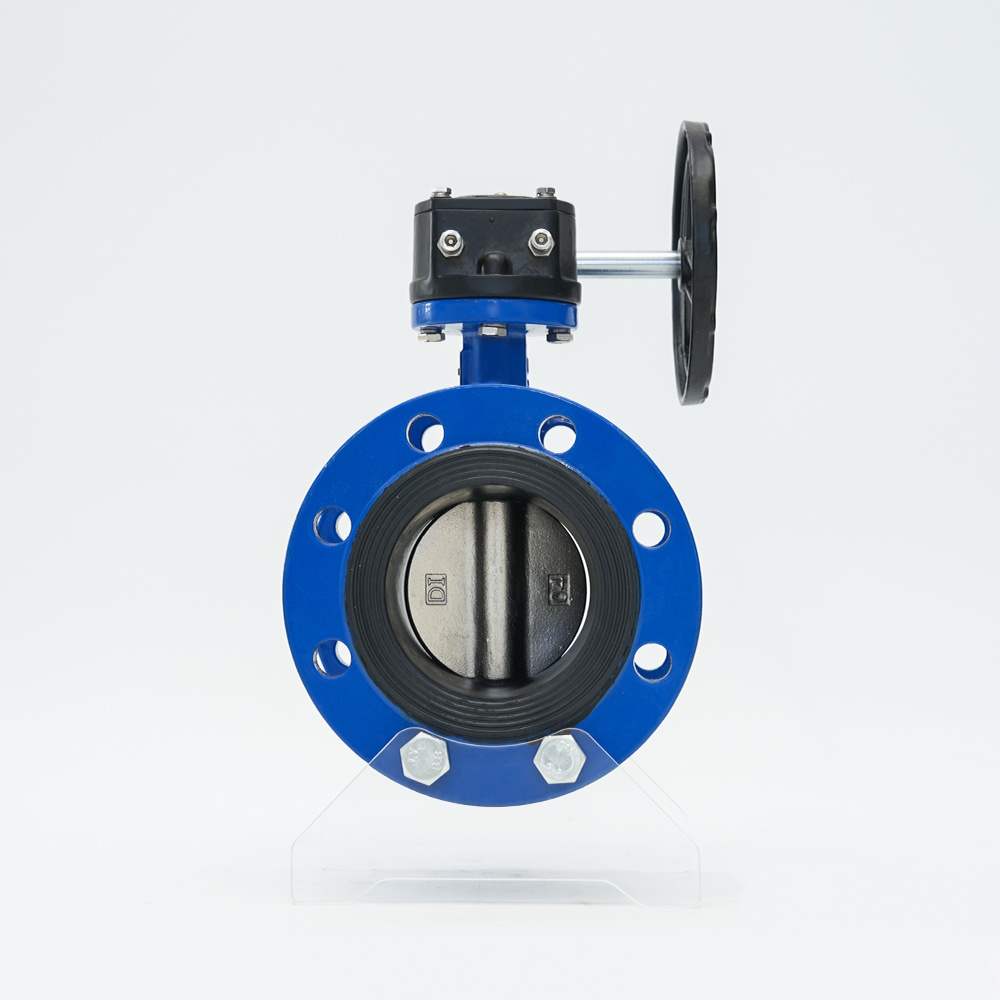 Turbine Flange Butterfly Valve D341X-16QFlange butterfly valve is a high-quality soft seal valve. It is mainly composed of the valve body, butterfly plate stem, operating mechanism, and other parts. It has t...View Product →
Metal-seated valves - cast steel gate and globe valves, stainless steel valves for hot or aggressive service, and most metal-seated butterfly valves - cannot realistically hold that line, so the standard gives them a measured allowance. The permissible rate is written as drops of liquid per minute, or as bubbles of gas per minute when the closure test is run with air or another gas, and it grows gradually with nominal size: the smallest valves get the tightest figure, while larger seats are given a slightly larger one. Check valves are covered as well, with reverse-flow tightness verified by applying pressure in the closing direction, and metal-disc check valves have their own allowance.
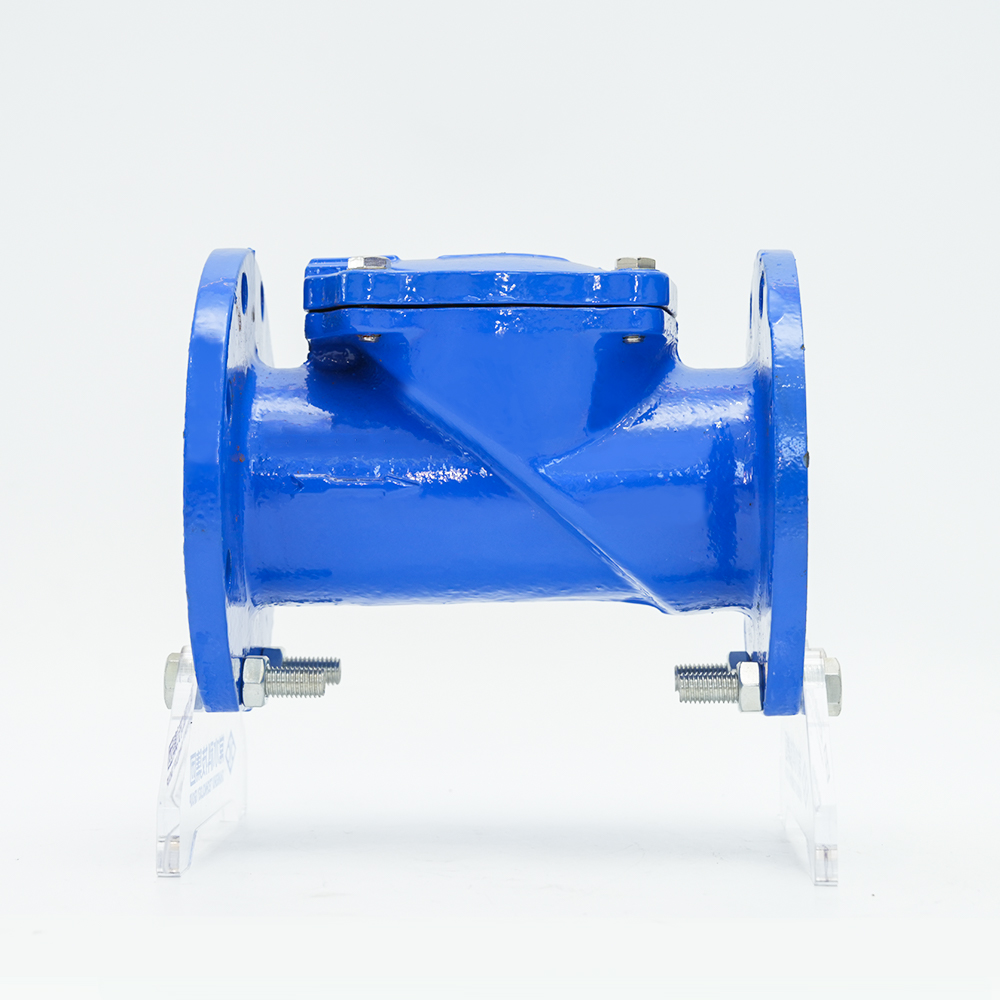 Rubber Disc Check Valve H44X-16QThe rubber flap check valve is mainly composed of the valve body, the valve cover, and the main parts of the rubber flap. The rubber is made of ductile iron flap and l...View Product →
Two practical points are worth keeping in mind. The numbers are medium-dependent, so a valve that passes comfortably with water may struggle when the same seat is tested with gas, which is why gas closure tests are normally specified only when gas is the real service medium. And the allowance is a factory pass line, not a licence to leak in service, so it should always be read together with the pressure-temperature rating that defines the test pressure in the first place. We keep a plain-language guide to those ratings in our technical notes on ASME, API and ISO ratings if you want the background.
Leakage Classes I to VI and the Lettered Rates
Control valves are usually specified with the ANSI/FCI 70-2 classes, which are also published as IEC 60534-4. Class I means no test is required; Classes II, III and IV are written as a percentage of the valve's rated capacity (0.5%, 0.1% and 0.01% respectively); Class V is a small absolute figure tied to port diameter and differential pressure; and Class VI is the bubble-tight class, judged by a bubble count per minute that depends on port size.
| Document | What it defines | Where it is used |
|---|---|---|
| API 598 | Test methods, hold times, no-leakage rules for shell and backseat tests, and allowable closure leakage by size and seat type | General valve acceptance; referenced by API product standards |
| ANSI/FCI 70-2 (IEC 60534-4) | Leakage Classes I to VI, expressed as a share of rated capacity or as bubbles per minute | Control valves and throttling applications |
| ISO 5208 | Lettered leakage rates for industrial valves, beginning with a no-visible-leakage rate | International projects requesting an ISO test basis |
| EN 12266-1 | A comparable lettered rate system for European specifications | European water, HVAC and industrial projects |
Class IV: the metal-to-metal process standard
0.01% of rated capacity is the level most metal-seated control valves are expected to reach, and it is the usual minimum for a modulating valve that also has to shut off reasonably well.
Class V: very low leakage
Class V is a much tighter figure, written as 5 x 10^-12 m3/s per millimetre of port diameter per bar of differential pressure. It normally needs specially lapped metal seats or a soft insert.
Class VI: bubble-tight
Class VI requires air or gas testing and a bubble count that rises with port size, so it is almost always achieved with a resilient seat, a lined valve, or a soft-seated butterfly or ball valve. Demanding Class VI from a large cast steel gate valve is where projects tend to lose time and money.
Specifying Tightness Without Over-Paying
- Do not write "API 598 Class VI". The phrase mixes two documents. For isolation valves, ask for a closure test to API 598 with no visible leakage or an agreed drop rate; for control valves, ask for ANSI/FCI 70-2 Class IV or Class VI.
- Match the requirement to the consequence. Bubble-tight shut-off is worth paying for on a chiller isolation valve or a fire protection riser, while the same demand on a normally open bypass valve buys very little.
- Decide the test medium early. Water is the default; air or gas closure testing changes the acceptance unit from drops to bubbles and adds test time.
- Expect size to matter. A DN50 metal-seated valve and a DN600 metal-seated valve are not held to the same drop rate, and they should not be quoted as though they were.
How We Prove It Before a Valve Leaves the Factory
Testing is a routine part of production for us rather than a special order. Every batch is examined and pressure tested on dedicated benches, and the results are recorded against the valve's size, seat type and rating so that a third-party inspector or a customer's engineer can witness or review the run. Our materials laboratory supports that work with spectrometers, a universal testing machine, a low-temperature impact tester, ultrasonic flaw detection, metallographic analysis, a coordinate measuring machine and torque measurement, which is how we can tell whether a failure at the bench is a seat problem or a casting problem. You can read more about our manufacturing and quality control approach on the main site.
For isolation duty across water, heating and industrial pipework, the cast steel flange gate valve below is a good example of a metal-seated product that is tested to the drop-rate side of API 598, while our lined and stainless steel ranges take the same test discipline into more aggressive media.
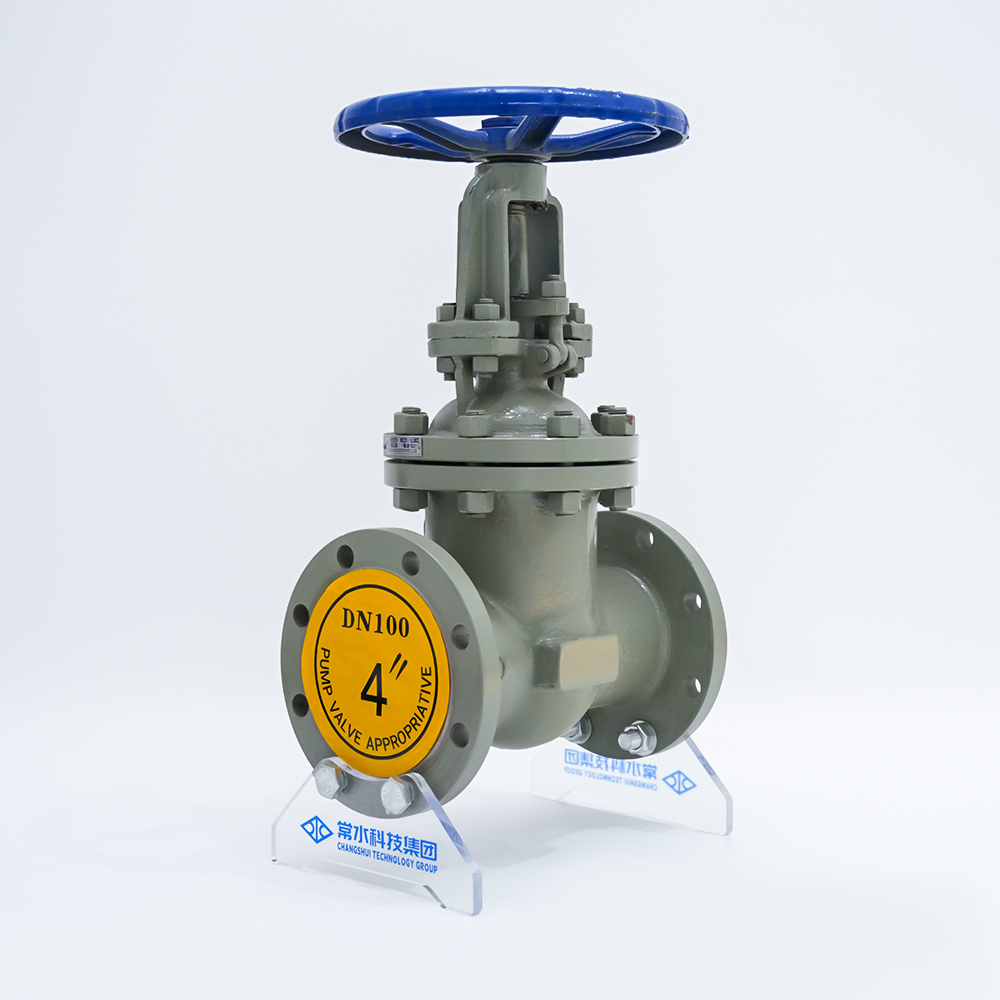 Cast Steel Flange Gate Valve Z41H-16C1. The fluid resistance is small, and the sealing surface is less brushed and eroded by the medium.View Product →
Quick Answers
Is there such a thing as an API 598 Class VI valve?
No. API 598 describes tests and allowable leakage rates; it does not define leakage classes. A valve can be tested to API 598 and separately rated Class VI to ANSI/FCI 70-2, but those are two distinct statements.
What leakage is allowed for a soft-seated butterfly valve?
Under an API 598 closure test, none that is visible. A resilient-seated valve has to hold its seat for the test period without a drop or a bubble.
Does API 598 apply to check valves?
Yes. Visual examination is part of it, and seat tightness is checked in the closing direction, with a defined allowance for metal discs and a no-leakage expectation for soft discs.
"Leakage class" is convenient shorthand, but it stands for two different things: a test standard that tells you how to run the test and how much leakage is acceptable, and a class system that tells you how tight a seat has to be. Once a specification separates those two ideas, the conversation with your supplier becomes much shorter, and the valve that arrives on site is far more likely to pass the witness test on the first attempt. If you would like to talk through the right closure test and the right seat material for your line size and medium, our engineers are always glad to help.