
 中文简体
 English
 русский

Content
If you have spent any time on a municipal water specification, you have met the letters AWWA on the drawing. They are not a brand, and they are not a pressure class. They are a standards family, and for gate valves they quietly decide everything from how thick the body wall has to be to how the wedge still seals after twenty-five years underground. In this guide we walk through what those standards actually ask for, how C509 and C515 differ, when a non-rising stem makes more sense than an outside screw and yoke, and what to check before you sign off on a submittal.
What the AWWA Prefix Really Tells You
AWWA stands for the American Water Works Association, and its C-series standards are the documents most North American utilities and their consultants build specifications around. For gate valves, three of them matter most: C509 and C515, both covering resilient-seated designs, and C500, which covers the older metal-seated double-disc pattern still found in plant piping and raw water service.
What makes these documents useful is how little they leave to interpretation. They fix a minimum body wall thickness for each size, the stem material and its minimum diameter, the rubber compounds permitted on the wedge, the direction and duration of the seat test, the coating film thickness, and even what has to be cast or stamped on the bonnet. Interior and exterior coating is usually called out through the C550 reference, which in practice means a fusion-bonded epoxy in the range of 8 to 12 mils dry film thickness.
That bonnet marking is worth pausing on. A compliant AWWA gate valve is traceable from the outside, not only in the paperwork — size, working pressure, standard number and the manufacturer's mark all appear on the casting. When a valve lands on site with none of those markings, that is the moment to ask a question, not six months later when the trench is backfilled.
C509, C515 and C500 Side by Side
The two resilient-seated standards are often treated as interchangeable, and in a lot of buried distribution work they nearly are. The practical difference comes down to wall section, weight, and therefore cost per unit and handling effort on site.
| Standard | Seating | Body wall | Typical sizes | Where it fits |
|---|---|---|---|---|
| AWWA C509 | Resilient, rubber-covered wedge | Full-wall ductile iron | 3–48 in. | Trunk mains, large distribution lines, long service life |
| AWWA C515 | Resilient, rubber-covered wedge | Reduced-wall ductile iron | 3–24 in. | Smaller distribution mains, fire protection lines, weight-sensitive sites |
| AWWA C500 | Metal seated, double disc | Cast or ductile iron | 2–48 in. | Raw water, plant piping, debris-tolerant duty |
In plain terms: for a large buried main expected to serve for decades, C509 is the conservative choice. For a smaller distribution main or a fire line where weight and unit cost matter, C515 does the same hydraulic job with a lighter casting. C500 still appears where metal seating is preferred, but across new potable water work the resilient seat has largely taken over. Both resilient standards are commonly rated around 200 psi in distribution sizes, with lower ratings in the largest sizes.
NRS or OS&Y: Getting the Stem Right
Both stem styles do the same hydraulic job. The decision is about where the valve sits and who needs to look at it.
Non-rising stem (NRS)
The stem turns without travelling upward, and the wedge rides on a threaded nut inside the valve. Overall height stays constant, which suits vaults, pits and buried installations where there is simply no room for a stem to rise. The trade-off is that position feedback comes from the number of turns, not from a glance at the stem, so operating records matter more.
Outside screw and yoke (OS&Y)
Here the stem rises through the bonnet as the valve opens, so anyone walking past can see the position immediately. That visibility is why OS&Y pattern valves are common in pump stations, treatment works and fire protection risers, where operators need a fast visual check. The cost is height and exposure — the stem and yoke threads need cleaning and lubrication to stay workable.
Our rule of thumb after years of site visits: bury it and go NRS, keep it visible and go OS&Y.
The Details That Decide Service Life
Two valves can carry the same standard number and still behave very differently after a decade in the ground. These are the points we suggest checking line by line on any submittal:
- Wedge and seat: a fully rubber-encapsulated wedge gives a bubble-tight closure against a rough or slightly damaged seat face; a rubber seat ring retained in the body does the same job from the other direction.
- Body and wall section: ductile iron with a verified minimum wall thickness, not a nominal figure taken from a drawing.
- Coating: fusion-bonded epoxy applied inside and out, with film thickness and holiday testing recorded, since most long-term corrosion complaints trace back to coating rather than casting.
- Stem and fasteners: a bronze or stainless stem with proper thrust washers and O-ring seals, and bolting that will not seize after years of wet service.
- Bonnet joint: a gasket that survives thermal cycling and pressure surges without weeping.
Where These Valves Earn Their Keep
Resilient-seated AWWA gate valves are the default isolation valve for potable water distribution, transmission mains, pump station suction and discharge headers, treatment plant piping and fire protection networks fed from a municipal main. The full-bore, straight-through design gives minimal pressure loss when open, and the resilient seat tolerates the grit and debris that inevitably find their way into older networks.
They are not always the right answer, though. Where space is tight, where a quarter-turn operation is preferred, or where the line needs throttling or flow regulation, a butterfly valve often displaces the gate valve entirely. If your project touches both, our comparison of AWWA butterfly valve types and standards covers the selection side in more detail.
A Short Selection Checklist
Before you commit to a size and pattern, work through these in order:
- Confirm the governing standard and the edition your client's specification references.
- Fix the size against the actual pipe bore and the required flow velocity, not the nearest available valve.
- Choose NRS or OS&Y based on location, access and operator visibility.
- Decide the end connection: flanged drilling, mechanical joint, grooved or threaded.
- Check the pressure rating against the maximum surge pressure, not just the static working head.
- State the coating system, the seat rubber and the stem material explicitly in the purchase order.
Installation and Care Notes
- Store valves indoors or under cover, with end caps left on until installation, so grit does not reach the seat faces.
- Support the pipe on both sides of the valve; a gate valve should never carry pipe load.
- Open and close the valve fully once before backfilling or commissioning, to make sure the wedge has not shifted in transit.
- Exercise isolation valves on a scheduled basis — an annual cycle of full open and full close keeps the stem threads and seat faces healthy.
- For buried NRS valves, keep the operating nut accessible and clear, and record the turn count for each valve on the network drawing.
Working Through an AWWA-Spec Order With Us
Our ductile iron gate valve range covers the same water-network duties these standards describe — resilient seating, a non-rising or rising stem choice, and flanged, grooved or threaded ends for different installation conditions. If your specification is written around AWWA C515 or C509, send us the data sheet before you send a purchase order. We would rather tell you clearly where a catalogue valve meets your clause and where it needs a change than discover the gap at inspection.
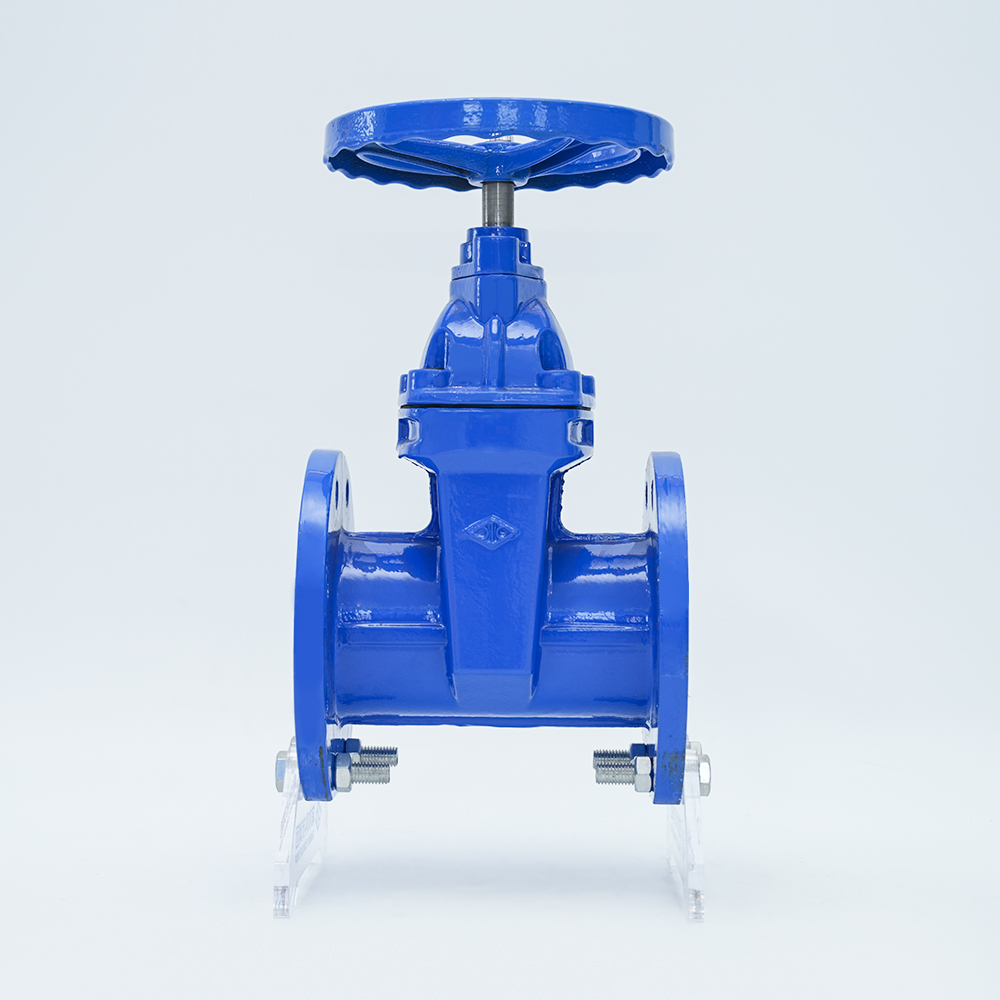 Z45X Non-Rising Stem Soft Seal Gate ValveDuctile iron gate valve with fully rubber-coated disc and concealed stem, suited to buried mains and vaults where fixed height simplifies installation.View Product →
The Z45X non-rising stem pattern is the workhorse for buried mains and vaults, where a fixed overall height keeps the installation simple and the operating nut stays within reach.
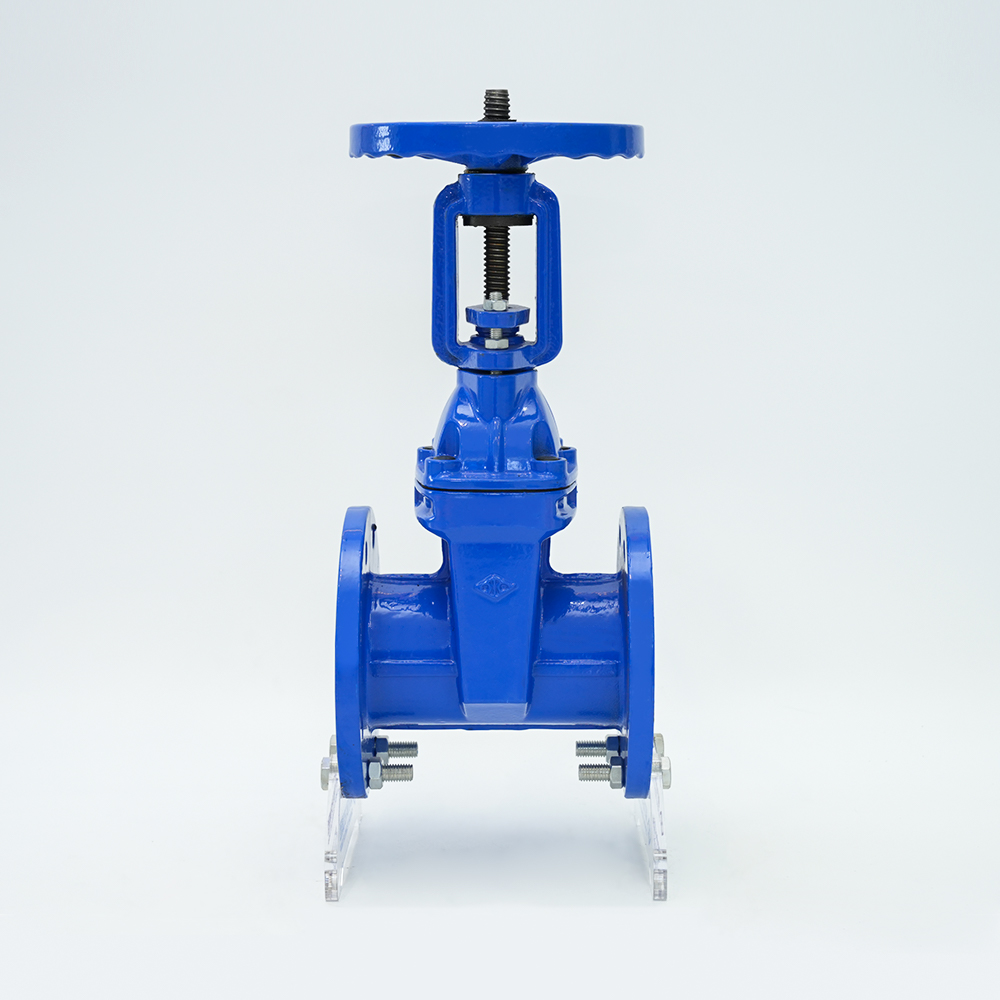 Z41X Rising Stem Soft Seal Gate ValveFlanged rising-stem ductile iron gate valve with rubber-coated gate plate, offering visible position feedback for pump stations and plant rooms.View Product →
Where operators need to read valve position at a glance, the Z41X rising stem pattern gives that visible feedback in pump stations and plant rooms.
 Z81X Grooved Rising Stem Gate ValveGrooved ductile iron gate valve with rubber-coated plate and rising stem for visible position, useful in fire protection and water systems where flanges are avoided.View Product →
For grooved systems, the Z81X saves a flange pair and shortens the installation window — a small detail that adds up on a large fire protection fit-out. Every unit passes through our own valve test platform before dispatch, and our laboratory runs ultrasonic, tensile and impact checks on the castings behind them. The certificates buyers usually ask for are listed on our certificate page, and if you are unsure which pattern suits your line, we are happy to look at the drawing with you.
Choosing an AWWA gate valve is less about picking a product and more about matching a written standard to a real trench, a real operating crew and a real maintenance budget. Get the standard, the stem style and the coating right, and the valve will quietly do its job for the next few decades without anyone thinking about it again.