
 中文简体
中文简体 English
 русский
Content
When a maintenance crew needs to shut off a water main or isolate a process line, the valve they reach for is usually a gate valve. It is a linear-motion valve that uses a flat or wedge-shaped gate to start and stop flow. When the handwheel is turned, the gate moves perpendicular to the flow path. Fully open, the gate is pulled completely out of the way, leaving a straight bore that matches the pipe diameter. That is why a gate valve produces very little pressure loss and is the standard choice for on/off isolation in water, fire protection, and many industrial systems.
How a Gate Valve Works
The working principle is straightforward. A gate valve contains a disk, called a gate, connected to a threaded stem. The stem passes through the valve bonnet and is connected to a handwheel, gearbox, or actuator. Rotating the handwheel moves the gate up or down. In the closed position, the gate presses against two seat rings to block flow. In the open position, the gate rises into the bonnet so fluid passes straight through.
Because the gate travels out of the flow stream, there is no obstruction in the fully open position. This gives gate valves a near-zero pressure drop and makes them efficient for lines that stay fully open for long periods. The trade-off is that they are not designed for throttling. A partially open gate remains in the flow path, which can cause vibration, seat erosion, and damage to the gate surface. Use gate valves for fully open or fully closed service only.
Rising Stem vs Non-Rising Stem
One key design difference is how the stem moves. In a rising-stem gate valve, also called an outside screw and yoke (OS&Y) valve, the stem threads are outside the valve body. As the valve opens, the stem rises above the handwheel, giving a clear visual indication of position. In a non-rising stem design, the stem stays in place while the gate moves along the threads. This makes the valve shorter and more compact, which is particularly useful for buried service where clearance above the valve is limited.
For buried water lines, non-rising stem soft-seal gate valves are a common choice because their compact height reduces excavation depth and the resilient seat provides a bubble-tight seal even with minor debris on the sealing surface.
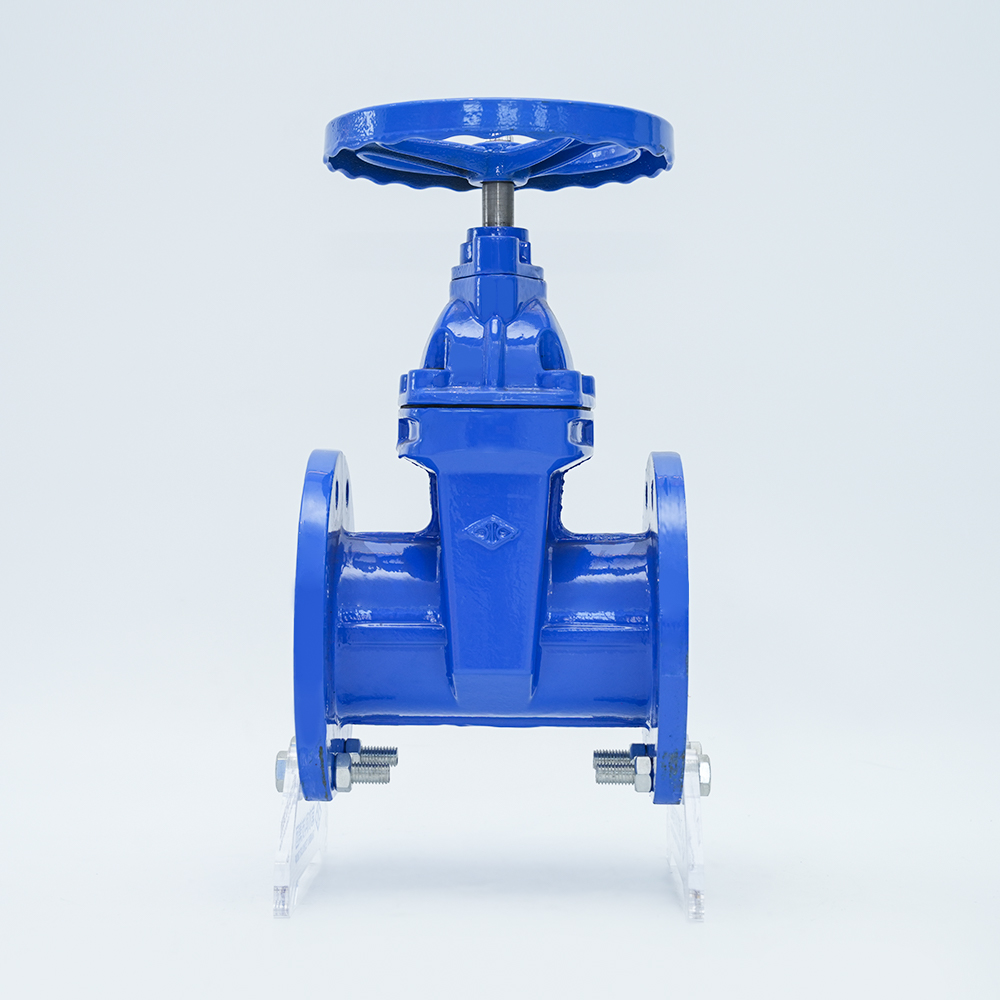 Ductile Iron Dark Stem Soft Seal Gate Valve Z45X-16Q Suppliers, OEM/ODM Company Changshui is China custom Ductile Iron Dark Stem Soft Seal Gate Valve Z45X-16Q suppliers and OEM/ODM Dark Stem Soft Seal Gate Valve Z45X-...View Product →
Key Components and Their Jobs
To see how a gate valve works, it helps to break the valve into parts. Each component plays a specific role in sealing and operation.
| Component | Function |
|---|---|
| Gate | Moves vertically to block or allow flow. Wedge, split, and parallel designs suit different service conditions. |
| Stem | Converts handwheel rotation into linear gate movement. Rising or non-rising patterns determine how the valve indicates position. |
| Seat rings | Provide a sealing surface for the gate. Metal seats suit high temperatures; resilient seats give bubble-tight shutoff. |
| Bonnet | Covers the valve body and contains the stem and packing. It can be bolted, screwed, or welded for pressure containment. |
| Packing gland | Compresses packing around the stem to prevent leakage to the atmosphere while still allowing smooth stem travel. |
In a resilient-seat valve, the seat is often molded into the body or the gate is coated with rubber. That construction allows the gate to wedge tightly against the seat and create a dependable shutoff, even if the pipeline carries small particles.
Common Gate Valve Types
Gate valves are classified by gate design, stem arrangement, and seat material. Each type has strengths that make it more suitable for particular fluids and operating conditions.
Wedge Gate Valves
The gate is a single wedge that drives between two angled seat rings. A solid wedge is simple and reliable for most clean liquids. A flexible wedge has a cut around the center to allow slight flexing, which helps the valve seat properly under thermal expansion or pipe stress. A split wedge consists of two pieces that can adjust to seat alignment, but it is less forgiving with dirty or abrasive media.
Parallel and Knife Gate Valves
Parallel gate valves use a flat gate and two parallel seats. They are often found in low-pressure systems where bubble-tight sealing is not critical. Knife gate valves use a sharp-edged gate that cuts through slurries, pulp, and viscous fluids. They are common in wastewater, mining, and paper plants where solids could otherwise prevent the valve from closing.
Rising Stem vs Non-Rising Stem, and Seat Materials
In addition to gate shape, the stem type matters for installation and operation. Rising stem gate valves provide an immediate visual check of whether a valve is open or closed; non-rising stem designs suit confined spaces. The seat material also drives performance. Metal-to-metal seats handle high temperature and abrasive fluids, while resilient seats provide excellent leak-tightness in water and wastewater service.
For above-ground industrial lines where operators need a visible position indicator, rising stem soft-seal gate valves are frequently specified. The rising stem makes maintenance easier because the threads stay outside the valve body and are less exposed to the line media.
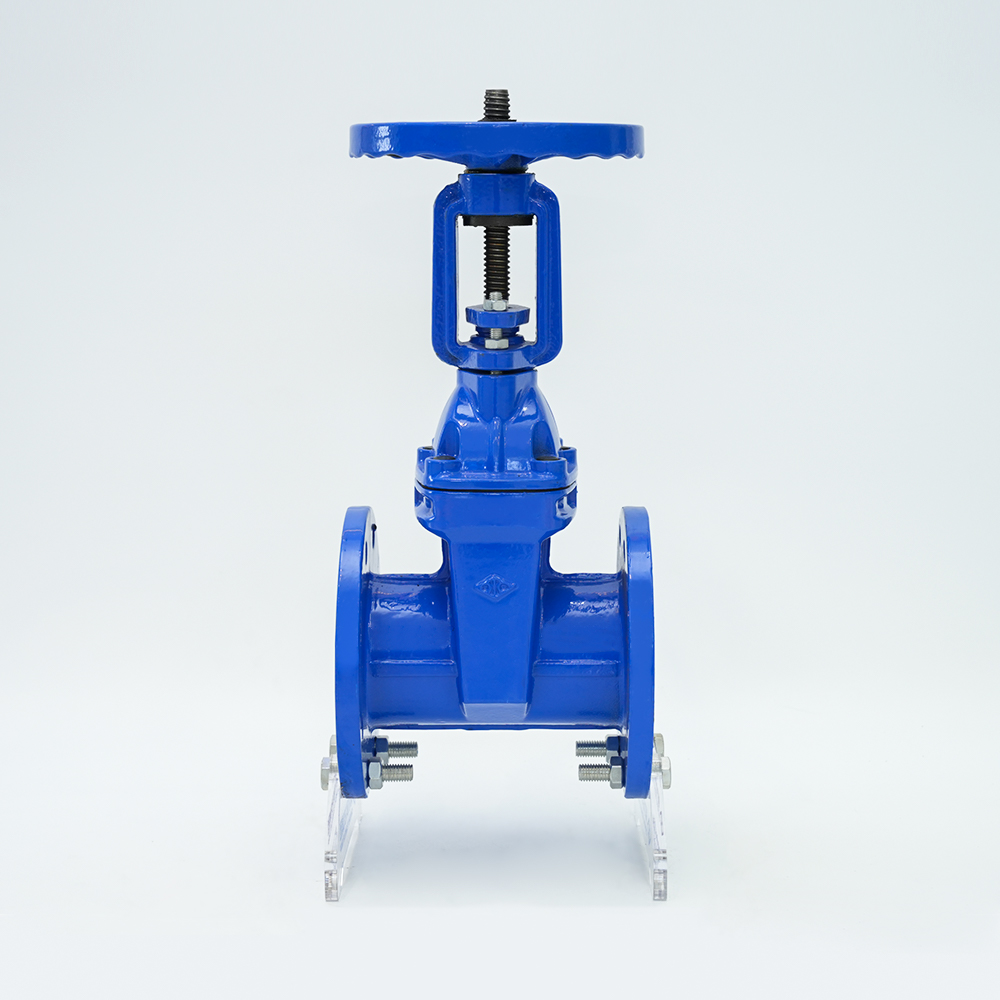 Ductile Iron Rising Stem Soft Seal Gate Valve Z41X-16G Suppliers, OEM/ODM CompanChangshui is China custom Ductile Iron Rising Stem Soft Seal Gate Valve Z41X-16G suppliers and OEM/ODM Rising Stem Soft Seal Gate Valve Z...View Product →
Gate Valve vs Ball, Globe, and Butterfly Valves
Selection is easier when you compare a gate valve to the other valves in the same duty. The table below summarizes the main differences.
| Valve type | Primary use | Throttling suitability | Pressure drop when open | Shutoff quality |
|---|---|---|---|---|
| Gate valve | Isolation (fully open/closed) | Poor | Very low | Excellent with resilient seat |
| Ball valve | Isolation and fast operation | Fair, limited | Low | Excellent |
| Globe valve | Flow regulation and throttling | Good | Moderate to high | Good |
| Butterfly valve | Isolation and throttling in large pipes | Fair to good | Low to moderate | Good |
The practical rule is simple: if you need a tight shutoff and a straight full-open flow path, a gate valve is hard to beat. If you need to regulate flow continuously, a globe valve is a better choice. If you need quick quarter-turn operation, a ball or butterfly valve may be more convenient.
What to Consider Before Buying a Gate Valve
Getting the right gate valve is more than picking a size. These factors determine whether the valve will operate reliably and last as long as the pipeline.
- Body material. Ductile iron is the standard for water and wastewater because it balances strength, corrosion resistance, and cost. Cast steel is used for higher pressure and temperature services. Stainless steel is preferred for corrosive chemicals, food processing, and environments where iron contamination is not acceptable. Fluorine-lined valves handle highly aggressive acids.
- Pressure and temperature rating. Check the nominal pressure (PN) or class rating. A valve with a higher rating is heavier and more expensive, while an undersized rating is a safety hazard.
- End connections. Flanged ends are common on large or high-pressure lines; grooved ends speed up installation in fire protection and water systems; threaded ends fit small-bore piping.
- Seat material. Resilient seats deliver bubble-tight closing in clean water service. Metal seats are better where high temperature, abrasion, or chemical exposure is expected.
- Operation. A handwheel is sufficient if the valve is opened rarely. For large valves or frequent operation, a gearbox or electric actuator may be needed.
Many corrosive systems use stainless steel flanged gate valves because the wetted components have high chromium and nickel content, which resists rust and chemical attack. In less demanding water service, ductile iron offers a cost-effective alternative with proven long-term performance.
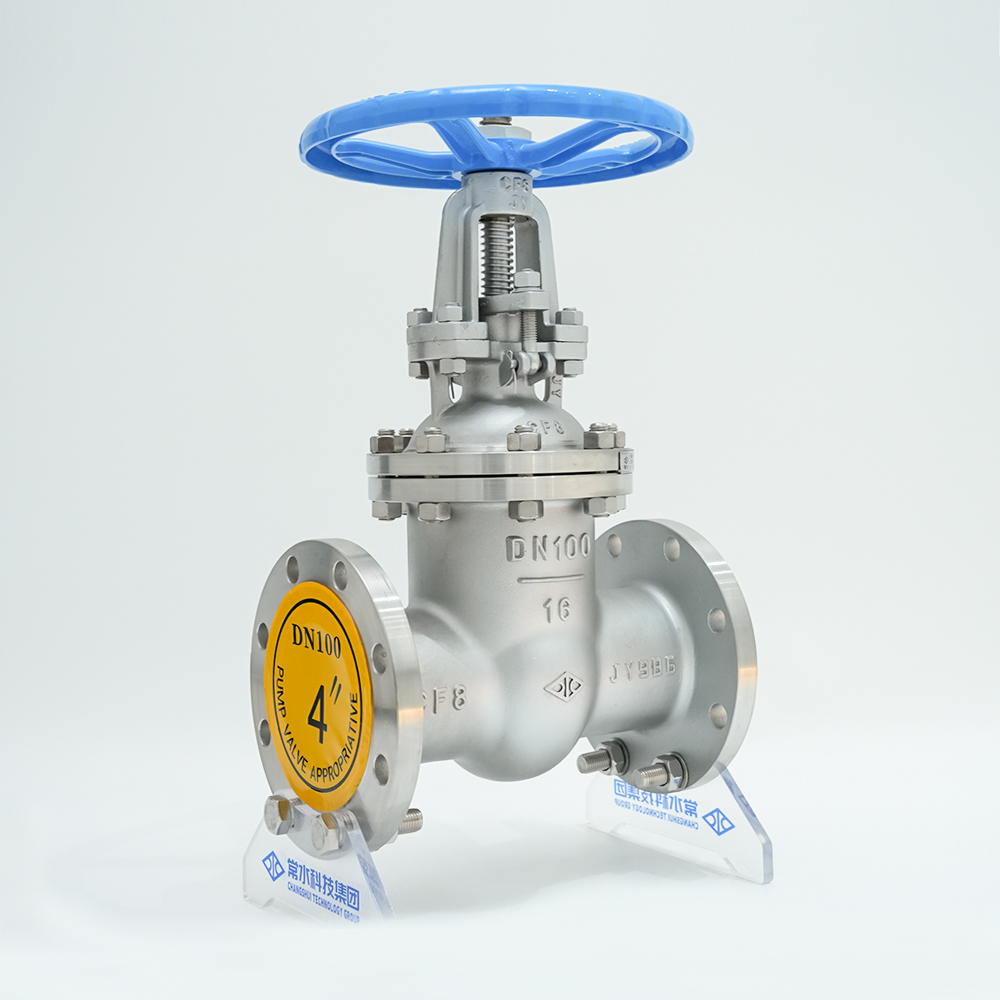 Stainless Steel Flange Gate Valve Z41W-16P Suppliers, OEM/ODM Company - ChangshuChangshui is China custom Stainless Steel Flange Gate Valve Z41W-16P suppliers and OEM/ODM Stainless Steel Flange Gate Valve Z41W-16P com...View Product →
Installation and Maintenance Tips
Gate valves perform best when installed and operated correctly. A few practical points can prevent most field failures.
- Install the valve with the stem vertical or at least no lower than horizontal, if possible, to keep debris away from the stem sealing area.
- Support the pipe on both sides of the valve so weight does not distort the body and affect sealing.
- Open and close the valve fully. Do not leave it partly open for throttling.
- Operate the valve periodically if it is in a standby line to prevent the gate from seizing in the closed position.
- Keep packing gland nuts snug but not over-tightened so the stem can still move freely.
Following the best practices for opening valves can extend service life and avoid damage to the sealing surfaces.
Final Thoughts
A gate valve works by lifting a gate out of the flow path to create a straight, unobstructed bore. It is an isolation specialist: excellent for fully open or fully closed service, but not for throttling. Understand the stem design, seat material, and pressure rating, and choose a body material that matches your medium. With the correct selection and simple maintenance, a gate valve can serve reliably for decades in water, fire protection, and industrial piping systems.