
 中文简体
中文简体 English
 русский
Content
- 1 What Is Check Valve Cracking Pressure and Why Does It Matter
- 2 How Cracking Pressure Is Determined: The Physics Behind the Spec
- 3 Cracking Pressure by Valve Type: A Comparison
- 4 Key Factors That Shift Cracking Pressure in Real Systems
- 5 Cracking Pressure vs. Reseal Pressure: Understanding the Full Cycle
- 6 How to Select the Right Cracking Pressure for Your Application
What Is Check Valve Cracking Pressure and Why Does It Matter
Cracking pressure is the minimum upstream pressure required to push a check valve open and allow the first detectable flow of fluid through the valve body. More precisely, it is the pressure differential between the inlet and outlet ports at the moment flow is initially observed — not when the valve is fully open, but when it first "cracks" off its seat.
This distinction is critical. A check valve at cracking pressure is only partially open. Full flow capacity typically requires pressures two to three times higher than the cracking pressure value, a characteristic engineers refer to as the valve's opening curve. Specifying cracking pressure without understanding that curve can lead to undersized system pressure budgets and unexpected performance shortfalls.
Cracking pressure is usually expressed in psi, psig, bar, or kPa. For most industrial check valves, it falls within the range of 0.5 to 5 psi. Specialized applications — aerospace, semiconductor fabrication, cryogenic systems — may require values far outside this band, either ultralow (0.1–0.3 psi) or elevated (10–50 psi). Understanding how flow direction is represented in piping diagrams is a useful first step before diving into cracking pressure specification, since both parameters are tightly coupled in system design.
How Cracking Pressure Is Determined: The Physics Behind the Spec
Cracking pressure is not an arbitrary number assigned by the manufacturer — it is an outcome of the physical forces that hold the valve closed. To open a check valve, the upstream fluid pressure must generate a force sufficient to overcome all opposing loads acting on the closure element (disc, ball, or flapper).
For a spring-loaded check valve, the governing relationship is straightforward. The spring exerts a closing force Fs = k × x, where k is the spring rate (lb/in or N/mm) and x is the initial compression of the spring at rest. The upstream pressure Pcrack must satisfy:
Pcrack = Fs / Aseat
where Aseat is the effective seating area of the closure element in square inches. A spring with a rate of 10 lb/in compressed 0.25 inches produces 2.5 lb of closing force. If the seat area is 0.5 in², the resulting cracking pressure is 5 psi. Changing to a softer spring (5 lb/in) at the same compression drops cracking pressure to 2.5 psi — demonstrating why spring selection is the primary design lever for adjusting this specification.
For gravity-dependent designs such as swing check valves, the closing force is provided by the weight of the disc and its moment about the hinge pin, rather than a spring. The effective cracking pressure therefore changes with installation orientation. In a horizontal installation, the disc weight acts perpendicular to flow and contributes only frictional resistance. In a vertical upward-flow installation, gravity assists opening, reducing cracking pressure. In a vertical downward-flow arrangement, gravity opposes opening, raising the cracking pressure — sometimes significantly.
Cracking Pressure by Valve Type: A Comparison
Different check valve designs produce fundamentally different cracking pressure characteristics. The table below summarizes typical ranges and notes for each major type to guide initial selection.
| Valve Type | Typical Cracking Pressure | Key Characteristic | Common Application |
|---|---|---|---|
| Swing Check | 0.5 – 1.5 psi | Gravity-dependent; orientation-sensitive | Municipal water, low-pressure lines |
| Spring-Loaded Piston | 1 – 10 psi | Spring-adjustable; orientation-independent | Pump discharge, chemical dosing |
| Wafer / Dual-Plate | 0.5 – 3 psi | Compact; spring-assisted; any orientation | HVAC, water treatment |
| Ball Check | 0.3 – 2 psi | Simple; gravity-dependent in many designs | Slurry, wastewater, food processing |
| Diaphragm Check | 0.1 – 1 psi | Very low cracking pressure; no metal parts in flow path | Pharmaceutical, semiconductor ultrapure water |
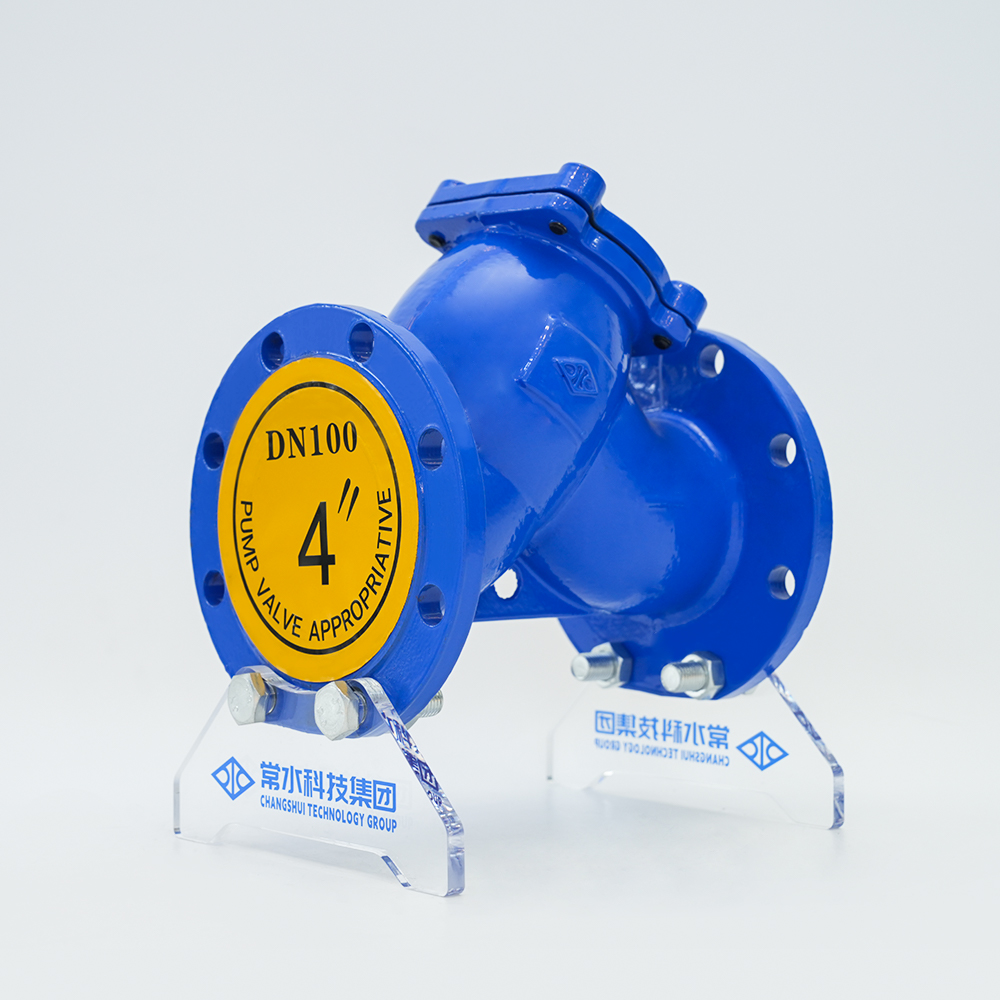
| Lift Check (Piston) | 1 – 5 psi | Preferred for vertical upward-flow installations | Steam, gas, high-pressure systems |
Note that these ranges represent standard spring configurations. Manufacturers can supply modified spring rates to shift cracking pressure outside the typical band for specialized requirements. Always confirm the exact value with your supplier's datasheet for the specific model and size being considered.
Key Factors That Shift Cracking Pressure in Real Systems
Laboratory-tested cracking pressure values are measured under controlled conditions with clean fluid at ambient temperature. In an installed system, several variables can push actual cracking pressure meaningfully away from the nameplate figure.
Installation orientation is one of the most impactful variables. A swing check valve tested horizontally at 1.2 psi may operate closer to 0.8 psi in a vertical upward-flow position (gravity assists the disc) and 1.8 psi in a downward-flow position (gravity resists). This variance of ±50% from the nominal value is significant enough to affect system hydraulics. Refer to detailed guidance on installation orientation and its effect on valve performance before finalizing mounting arrangements.
Temperature affects both metal springs and elastomeric seals. At elevated temperatures above 200°F (93°C), spring metal can lose tension, reducing cracking pressure by up to 15% over time. At temperatures below 32°F (0°C), elastomeric seals stiffen, increasing friction and raising cracking pressure. For cryogenic applications below −200°F (−129°C), spring constants can increase by 20–30%, requiring manufacturers to compensate with softer spring alloys or alternative closure mechanisms.
Fluid viscosity adds viscous drag to the opening resistance. A valve rated at 2 psi cracking pressure for water may require 3–4 psi when handling heavy oils with viscosity around 500 cP. Engineers working with non-water media should request cracking pressure data tested under actual fluid conditions, or apply a correction factor based on the viscosity ratio.
Wear and contamination alter cracking pressure over a valve's service life. Debris on the seat increases friction and raises cracking pressure. Corrosion on moving parts can produce the same effect, sometimes increasing cracking pressure by 50–100% over time. Spring fatigue, by contrast, gradually reduces cracking pressure as coil yield strength diminishes under cyclic loading. Scheduled inspection intervals and replacement criteria should be defined as part of any maintenance program.
Cracking Pressure vs. Reseal Pressure: Understanding the Full Cycle
Cracking pressure describes only the opening threshold. The other half of the check valve's operating cycle is governed by reseal pressure — the backflow pressure at which the valve closes tightly enough to stop all detectable flow in the reverse direction.
Reseal pressure is always lower than cracking pressure. For spring-loaded valves, the spring force that must be overcome during opening also assists closure — but only after the upstream pressure drops below a level at which the spring can fully reseat the closure element against backflow. As a general rule, valves with cracking pressures above 3–5 psi (0.21–0.34 bar) will typically reseal bubble-tight on spring force alone. Valves with very low cracking pressures (under 1 psi) may require measurable backflow before the closure element fully seats, meaning a short pulse of reverse flow occurs at shutdown.
This trade-off carries practical consequences. In systems where even a brief backflow pulse is unacceptable — such as chemical injection lines, medical gas supply, or precision dosing circuits — a higher cracking pressure specification provides more decisive closure. In low-pressure systems where pump capacity is limited, requiring a lower cracking pressure to reduce energy consumption may be necessary, but the designer must verify that the reseal behavior is acceptable for the application's contamination and safety requirements.
How to Select the Right Cracking Pressure for Your Application
Cracking pressure selection begins with a system pressure budget. The cracking pressure of the valve must be low enough that the available upstream differential pressure can open the valve under minimum flow conditions, yet high enough to ensure reliable closure against the maximum anticipated backflow pressure.
For pump discharge applications where water hammer prevention is a priority, spring-loaded designs with cracking pressures of 2–5 psi are well-suited. The spring-assisted closure minimizes reverse flow velocity and reduces pressure surge intensity, which is especially important in long horizontal piping runs or systems with significant elevation changes.
For HVAC and building water systems, low cracking pressure valves (0.5–1.5 psi) minimize the added head loss introduced into circulation loops. Wafer-style dual-plate designs are a compact, orientation-flexible choice in these applications. Ductile iron check valves for water supply and drainage systems offer the durability and pressure ratings needed for building services at competitive cost.
For chemical, pharmaceutical, and high-purity applications, the material of the valve body and closure element must be compatible with the fluid, and cracking pressure should be matched to system operating pressure with care. Diaphragm check valves offer ultralow cracking pressures with no metallic wetted parts — ideal for ultrapure water circuits. Where corrosion resistance is required alongside mechanical strength, stainless steel check valves for corrosive and high-purity media provide a reliable solution across a broad cracking pressure range.
For gas and compressor systems, cracking pressures on the higher end (3–10 psi) are preferred to prevent backflow decisively and accommodate pressure pulsations inherent in reciprocating machinery. Nozzle check valves or spring-loaded piston designs are typically specified here because of their rapid, spring-driven response and predictable cracking behavior under pulsating flow conditions.
Finally, always request a certified cracking pressure test report from your valve supplier for critical applications. industry standards for pressure-rated valve design and testing establish baseline qualification requirements, but application-specific testing under actual operating conditions remains the most reliable way to validate cracking pressure performance before installation.