
 中文简体
中文简体 English
 русский
Content
- 1 What is a Globe Valve?
- 2 Key Components and How They Work
- 3 Types of Globe Valves: T-Pattern, Angle-Pattern, and Y-Pattern
- 4 Globe Valve vs. Ball Valve vs. Gate Valve: When to Use Which
- 5 Material Selection Guide for Globe Valves
- 6 Actuator Options: Manual, Pneumatic, and Electric
- 7 Installation, Maintenance, and Common Troubleshooting
- 8 Conclusion and Selection Checklist
What is a Globe Valve?
A globe valve is a linear-motion valve that regulates flow by moving a disc or plug against a stationary seat. The name comes from the spherical shape of its body, though modern designs often have more compact form factors. Unlike ball valves or gate valves, a globe valve is built for throttling — it modulates flow through a tortuous S-shaped passage that creates precisely the kind of resistance you need for accurate control.
Inside the body, a baffle splits the interior into two chambers connected only by the seat opening. As you turn the handwheel, the stem drives the disc downward, progressively reducing the orifice area. This mechanism gives you infinite intermediate positions between fully open and fully closed. For engineers and plant operators, that means repeatable flow adjustment in systems handling steam, water, oil, or gas.
The sealing between the disc and seat is metal-to-metal or soft-seated, depending on the application. Globe valves can achieve tight shutoff, but their real strength is in partial-stroke operation. Every time you open a hose bib at home, you’re using a small globe valve — the same principle applies in 600-pound industrial steam lines.
Key Components and How They Work
Five primary parts define the behavior of every globe valve. Understanding each one clarifies why this valve type requires specific installation and maintenance routines.
- Body: The pressure-containing shell, typically cast in two or three pieces. Its internal baffle creates the S-shaped flow path that causes the higher pressure drop characteristic of globe valves.
- Bonnet: The top cover bolted to the body. It houses the stem packing and often provides a mounting point for actuators.
- Disc / Plug: The movable closure member that contacts the seat. Disc designs vary from flat to tapered to needle-shaped, each optimizing the flow characteristic for specific control tasks.
- Stem: A threaded spindle that converts rotary motion from the handwheel or actuator into linear motion. Rising stems show valve position at a glance; non-rising stems save space.
- Packing: Rings of compressible material around the stem that prevent leakage where the stem exits the bonnet. Adjusting the packing gland is the most common field maintenance task.
When the handwheel rotates clockwise, the stem advances the disc toward the seat. Fluid must pass through the restricted opening between disc and seat, losing pressure in the process. This controlled pressure drop is what makes globe valves excellent flow regulators. Reversing the movement lifts the disc off the seat, allowing full flow — though the S-shaped path still imposes a permanent pressure loss even when fully open.
The direction of flow matters. Most globe valves carry an arrow on the body indicating the preferred flow direction, usually “low in, high out” so that the disc closes against the pressure. Installing backwards can lead to water hammer or insufficient sealing.
Types of Globe Valves: T-Pattern, Angle-Pattern, and Y-Pattern
Not all globe valves are created equal. The arrangement of inlet and outlet ports relative to the seat defines three main patterns, each solving a different piping problem.
| Pattern | Flow Path | Pressure Drop | Typical Application |
|---|---|---|---|
| T-pattern (Straight) | Inlet and outlet at same level, flow turns inside the body | Highest | General throttling, steam lines, water treatment |
| Angle-pattern | Inlet and outlet at 90 degrees | Moderate | Piping with directional change, erosive media |
| Y-pattern | Inlet and outlet nearly in line, stem at 45 degrees | Lowest | High-pressure steam, blow-down systems |
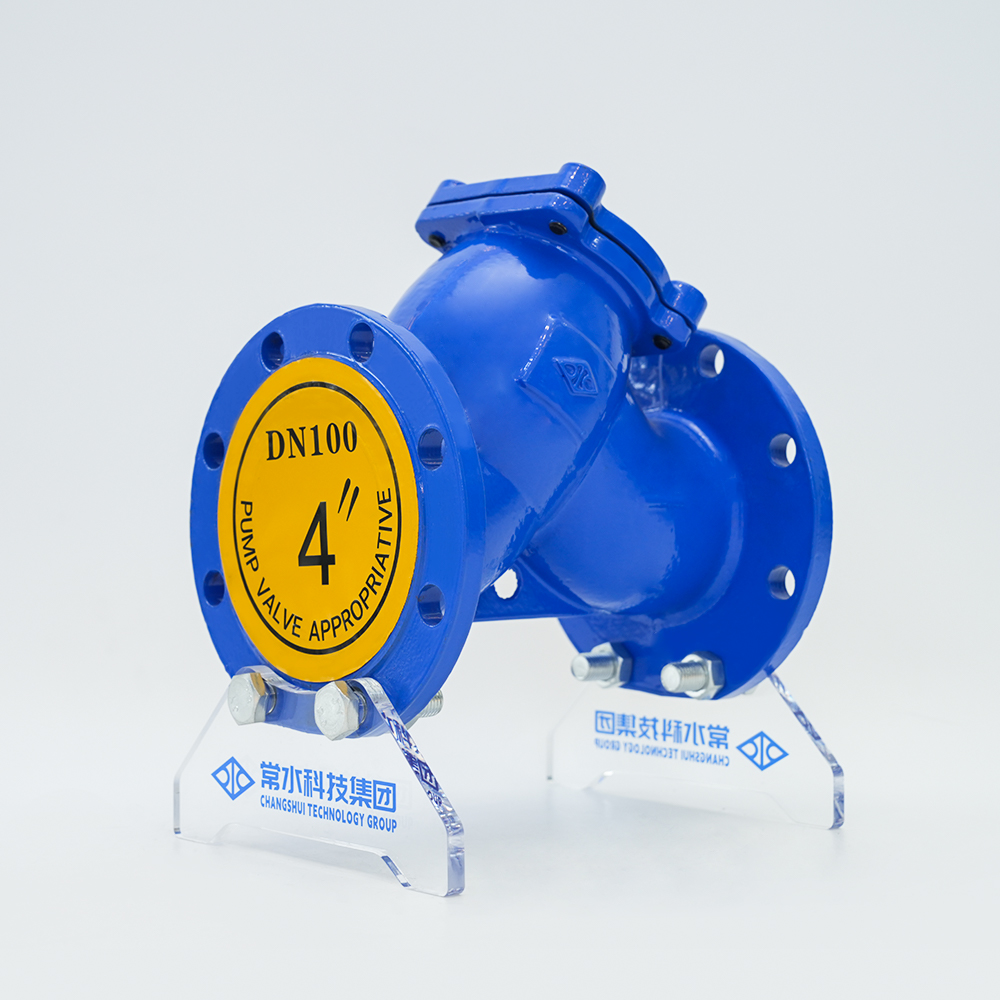
T-pattern valves are the workhorses: simple, robust, and cost-effective for moderate pressures. Angle-pattern designs replace both a valve and an elbow, simplifying piping in cramped equipment rooms or on heat exchanger skids. The Y-pattern variant, with its 45-degree stem angle, significantly reduces flow resistance. Engineers specify Y-pattern globe valves where maintaining line pressure is critical and the added cost is justified — for example in high-pressure steam drains or continuous blowdown services.
Choosing the right pattern depends on your piping layout and how much permanent pressure loss you can tolerate. If you’re upgrading an existing system, a switch from T-pattern to Y-pattern often recovers enough pressure to eliminate the need for a larger pump.
Globe Valve vs. Ball Valve vs. Gate Valve: When to Use Which
Selecting the wrong valve type for the job leads to early seat wear, poor control, or unacceptable energy costs. Here’s how the three most common industrial valve designs compare across the factors that drive total cost of ownership.
| Feature | Globe Valve | Ball Valve | Gate Valve |
|---|---|---|---|
| Flow regulation | Excellent — designed for throttling | Poor — not intended for partial openings | Poor — seat wear in mid-position |
| Shutoff tightness | Good; can be bubble-tight with soft seat | Excellent — full bore tight shutoff | Good — metal-to-metal wedge seal |
| Opening speed | Slow — multiple handwheel turns | Fast — quarter-turn from open to close | Slow — multiple turns |
| Pressure drop (fully open) | High — tortuous path | Negligible — full bore | Low — straight through |
| Risk of water hammer | Low if properly oriented | High if slammed shut | Low with slow closure |
A globe valve is the right call whenever you need to modulate flow, not just start or stop it. Cooling water control loops, steam heating circuits, and chemical feed lines all rely on globe valves for proportional control. A gate valve, by contrast, should stay fully open or fully closed — partial opening causes vibration and wire-drawing of the seat. Ball valves excel in on/off isolation and automated safety shutdowns thanks to their quarter-turn speed and zero leakage capability, but they cannot throttle accurately over a wide range.
Don’t let the higher pressure drop of a globe valve automatically disqualify it. In throttling service, the pressure drop is intentional and necessary for control. The real penalty appears only in fully open duty; if your application requires full bore flow most of the time, a resilient-seated gate valve or full-port ball valve often proves more energy-efficient.
Material Selection Guide for Globe Valves
Body and trim materials determine whether a globe valve survives five years or fifty. Matching the metallurgy to the fluid, pressure, and temperature eliminates the two most common failure modes: corrosion and erosion.
| Material | Grade (ASTM) | Temp. Range | Typical Pressure Class | Best for |
|---|---|---|---|---|
| Cast Iron | A126 Class B | -29°C to 230°C | PN10, PN16 | Water, low-pressure steam, HVAC |
| Ductile Iron | A536 65-45-12 | -29°C to 350°C | PN16, PN25 | Treated water, effluent, compressed air |
| Cast Carbon Steel | WCB (A216) | -29°C to 425°C | PN16, PN25, PN40 | Steam, hot oil, hydrocarbons, non-corrosive gas |
| Stainless Steel 304 | CF8 (A351) | -196°C to 538°C | PN16, PN40 | Corrosive fluids, food processing, chemical |
| Stainless Steel 316L | CF3M (A351) | -196°C to 538°C | PN16, PN40 | Chloride-bearing solutions, marine, pharma |
WCB carbon steel globe valves dominate utility systems because they handle saturated steam up to 425°C at a price point that suits most budgets. When corrosion resistance becomes non-negotiable, 316L stainless steel offers pitting resistance in chloride environments that 304 cannot match. Our cast steel flanged globe valves in WCB and our stainless steel globe valves in CF3M both undergo hydrostatic body tests and ultrasonic inspection before shipment, ensuring zero leakage at the rated pressure.
Select the trim (disc and seat) material based on the most aggressive fluid in the line. For clean steam, a 13Cr stainless disc against a Stellite hard-faced seat resists galling. For slurries or abrasive media, a cobalt-chromium overlay on both disc and seat extends service life. Always check compatibility with the fluid’s chloride content, pH, and velocity — high flow across a partially open soft seat can wash out PTFE or reinforced rubber in weeks.
Actuator Options: Manual, Pneumatic, and Electric
The handwheel is simple and reliable, but many processes demand automation. Choosing between manual, pneumatic, and electric actuation affects how precisely you control flow and how fast you can react to process changes.
- Manual (Handwheel / Gear): Lowest cost, no external power required. Best for infrequent adjustments and lines up to DN300. A bevel gearbox reduces rim pull on large valves.
- Pneumatic: Fast stroke, inherently safe in hazardous areas since no electricity is present. Spring-return models provide fail-safe closure on air loss. Suitable for rapid cycling up to several times per minute.
- Electric: Highest precision with 4–20 mA control signals, ideal for SCADA integration and remote operation. Multi-turn actuators match the rotating stem of a globe valve perfectly, enabling sub-1% positioning accuracy.
Pneumatic actuators dominate refineries and chemical plants because compressed air is available and explosion-proof. Electric actuators gain ground in water treatment plants and building HVAC where remote setpoint changes are routine. A single electric multi-turn actuator on a flanged globe valve can replace a manual operator plus a separate control valve, simplifying piping and reducing initial cost.
Factor in total lifecycle cost, not just purchase price. Manual valves cost the least up front but add labor for each adjustment. Pneumatic systems require dry, filtered air and periodic diaphragm replacement. Electric actuators need a reliable power supply but offer energy savings when integrated into a pressure management loop.
Installation, Maintenance, and Common Troubleshooting
Proper installation prevents 80% of globe valve failures. The single most important rule: observe the flow direction arrow cast into the body. Standard globe valves are designed for flow from below the disc (“low in, high out”) so that the disc closes with the fluid pressure, not against it. Reversed flow can make the valve impossible to shut, damage the packing, or cause chatter.
Installation Checklist
- Verify that the valve’s pressure class (PN16, PN25, PN40) matches or exceeds the maximum system pressure.
- Check that the temperature rating of the body and trim covers the expected fluid temperature range.
- Install with the stem vertical where possible to avoid uneven wear on the packing.
- Leave clearance above the valve for stem travel, especially with rising-stem designs.
- Flush the pipeline before final connection to remove welding slag, debris, and scale that can score the seat.
Common Issues and Corrective Actions
| Symptom | Probable Cause | Solution |
|---|---|---|
| Leakage around stem | Packing worn or gland loose | Tighten gland bolts evenly; replace packing if tightening fails |
| Valve cannot fully close | Debris on seat, eroded disc face | Open fully to flush, then close; lap or replace disc and seat if pitted |
| Chatter or vibration during throttling | Insufficient back pressure, disc not guided | Increase downstream restriction; switch to a guided-disc or cage-guided design |
| Excessive handwheel torque | Galling of stem threads, over-tightened packing | Lubricate stem threads; adjust packing torque; check for bent stem |
| Body erosion near seat | Local high velocity, abrasive particles | Reduce flow velocity with upstream diffuser; upgrade to hardened seat materials |
Schedule a baseline inspection after the first 500 operating hours. Measure stem leak rate, torque, and stroke time. Repeat annually or according to your plant’s criticality classification. A globe valve that cycles frequently in steam service may need packing retorque every three months; one that sits open in a bypass line may go years without attention — until it’s called upon to isolate a piece of equipment.
Conclusion and Selection Checklist
Globe valves remain the default choice for flow regulation because no other design combines modulating precision with such a simple, maintainable mechanism. The trade-off — higher permanent pressure drop — is the price you pay for control. When your process requires accurate throttling of steam, water, or chemicals across a known pressure differential, a globe valve sized correctly for the flow coefficient will deliver years of stable performance.
Before finalizing your specification, work through this short checklist:
- What is the fluid, and does it contain solids or corrosives?
- What are the minimum and maximum pressures and temperatures?
- Do you need on/off isolation, throttling, or both?
- What is the acceptable permanent pressure loss at full open?
- Does the valve need to fail open or fail closed in an emergency?
- Will the valve be operated manually, or integrated into a control system?
- What maintenance access and spare parts support exist at the installation site?
Answering these questions narrows the field to the right body pattern, material, and actuator. When the specification is built on actual operating data instead of guesswork, globe valve life expectancy routinely exceeds 15 years even in demanding services.