
 中文简体
中文简体 English
 русский
Content
What Is a Check Valve Disk and How Does It Work
A check valve disk is the core closure element inside a check valve — the moving component that opens to allow forward fluid flow and closes automatically to prevent backflow. Unlike manually operated valves, the disk responds entirely to pressure differentials in the pipeline, requiring no external actuator or operator input.
When upstream pressure exceeds downstream pressure, the fluid force pushes the disk off its seat, opening a flow path through the valve body. The moment forward flow stops or reverses, the disk returns to its closed position against the seat, blocking any reverse movement. In spring-assisted designs, a torsion or compression spring accelerates closure, ensuring the disk seals before significant backflow can develop. This mechanism makes the check valve disk indispensable in pump discharge lines, water treatment plants, high-rise building water systems, and any pipeline where reverse flow would cause equipment damage or contamination.
The geometry, mass, and material of the disk directly determine three critical performance parameters: closure speed, pressure drop across the valve, and long-term sealing reliability. Understanding these relationships is the foundation of correct valve selection.
Main Types of Check Valve Disks
Check valve disks are not one-size-fits-all. Three configurations dominate industrial and municipal applications, each with distinct structural characteristics.
Single Disk (Swing or Tilting)
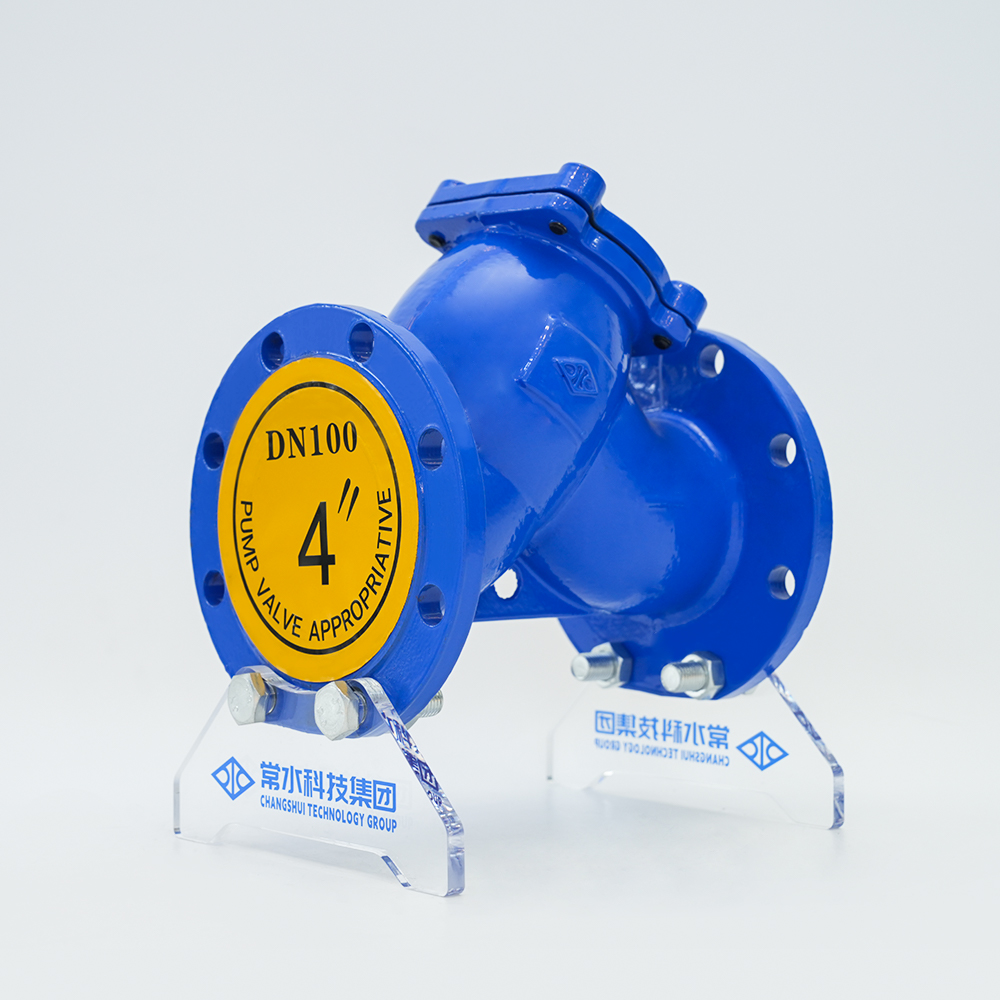
A single disk pivots on a hinge pin or shaft across the full bore of the valve. Swing check valves use gravity and flow reversal to close the disk, while tilting-disk designs seat at an oblique angle to reduce slam. Single-disk valves offer a large, unobstructed flow area and low pressure drop, making them well suited to moderate-flow, steady-state systems such as water mains and general-purpose pipelines. Their straightforward construction also simplifies inspection and maintenance.
Double Disk (Dual Plate)
A dual-plate or double-disk valve splits the flow bore into two halves, each covered by a semicircular disk mounted on a central shaft. Both disks open and close symmetrically, distributing pressure evenly across the valve body. This balanced design yields superior sealing performance, lower water hammer risk, and a more compact face-to-face dimension compared to single-disk types. Double-disk check valves are the standard choice for high-flow and variable-pressure applications — power generation, chemical processing, and large-diameter water distribution networks.
Rubber Disk (Flap)
Rubber disk check valves — sometimes called rubber flap or disc check valves — use a flexible elastomeric disk that deflects under forward flow and recovers elastically to seal against the seat when flow stops. Because the disk material itself provides the seal, these valves tolerate slight seat imperfections and deliver quiet, low-slam operation. They are widely used in building drainage, sewage systems, and pump protection in water supply networks where noise reduction and corrosion resistance are priorities.
| Type | Closure Mechanism | Pressure Drop | Best For |
|---|---|---|---|
| Single Disk | Gravity / spring | Low | General pipelines, moderate flow |
| Double Disk | Torsion spring, symmetrical | Very low | High flow, variable pressure |
| Rubber Disk | Elastic recovery | Low–medium | Drainage, sewage, quiet systems |
Materials Used in Check Valve Disks
Disk material selection determines corrosion resistance, temperature range, sealing quality, and service life. The three most common material families each occupy a distinct performance niche.
Rubber (EPDM, NBR, Neoprene)
Elastomeric disks deliver excellent sealing against irregular or worn seats and absorb minor impact during closure, reducing noise and vibration. EPDM rubber is compatible with potable water and many chemical solutions, while NBR suits oil-containing media. A rubber disc check valve is the standard solution for building water supply, fire protection risers, and sewage pump stations where chemical resistance and low maintenance are essential.
Stainless Steel (304, 316)
Stainless steel disks withstand high temperatures, aggressive chemicals, and high-cycle fatigue. Grade 316 provides enhanced resistance in chloride-rich environments such as seawater cooling systems and coastal installations. The hard seating surface requires precise machining to achieve bubble-tight shutoff, making stainless steel disks the preferred option for critical industrial processes, pharmaceutical plants, and high-pressure applications above PN25.
Ductile Iron
Ductile iron disks combine good impact toughness, higher tensile strength than grey cast iron, and cost-effectiveness for large-diameter water and wastewater valves. Paired with fusion-bonded epoxy or rubber lining, ductile iron disks comply with NSF-61 requirements for drinking water contact. They are the dominant choice for AWWA-class check valves in municipal waterworks projects.
How Disk Design Affects Water Hammer
Water hammer — the pressure surge caused by sudden flow reversal — is one of the most damaging forces in any piping system. The check valve disk is the frontline defense against it, and its design has a direct, measurable impact on hammer severity.
The root cause of slam-induced water hammer is disk lag: the time between flow reversal and full disk closure. A disk that is slow to close allows reverse velocity to build before seating, and the abrupt stop of that backflow column generates a shock wave. Reducing disk lag is therefore the primary design objective for low-slam check valves.
Dual-plate designs achieve rapid closure because each semicircular disk travels only half the angular distance of a full single disk before seating. Torsion springs pre-load the disks toward the closed position, so closure begins before flow actually reverses. In contrast, heavy single disks relying on gravity must wait for reverse flow to physically push them shut — a significantly slower process. For systems with frequent pump starts and stops or those serving high-rise buildings, selecting a spring-assisted dual-plate disk valve can eliminate water hammer entirely without the cost of additional surge suppression equipment.
Selecting the Right Check Valve Disk for Your System
No single disk type is optimal for every application. A structured selection process based on five system parameters will identify the correct valve and avoid costly retrofit work later.
- Flow velocity and pipe diameter: High-velocity, large-bore lines favor dual-plate designs for their low pressure drop and fast closure. Low-velocity, smaller systems can use simpler single-disk or rubber flap valves.
- Operating pressure and temperature: Verify the disk material and seat rating cover both maximum working pressure and temperature extremes, including thermal cycling.
- Media compatibility: Match disk material to the fluid — rubber for clean water and mild chemicals, stainless steel for corrosive or high-temperature media, ductile iron for large water infrastructure.
- Installation orientation: Gravity-dependent swing disks require horizontal installation or upward vertical flow. Spring-assisted disks operate reliably in any orientation. Review detailed guidance on check valve installation orientation before finalizing layout.
- Cracking pressure requirement: Systems with low differential pressure at startup need disks calibrated to open at minimal pressure. Understanding check valve cracking pressure specifications is critical for accurate sizing, particularly in gravity-fed or low-head pump systems.
Installation Tips for Check Valve Disk Systems
Even the best-specified disk check valve will underperform if installed incorrectly. These practical guidelines apply to the majority of industrial and municipal installations.
Always confirm the flow direction arrow cast or stamped on the valve body matches actual flow in the pipe. A reversed check valve blocks flow entirely and creates immediate system failure. For swing and single-disk valves, maintain at least five pipe diameters of straight run upstream to allow fully developed, turbulent-free flow to reach the disk — turbulence causes disk flutter and premature seat wear. Dual-plate valves are less sensitive but still benefit from three diameters of straight upstream pipe.
Avoid installing check valves immediately downstream of elbows, reducers, or pump discharge nozzles without a straight pipe transition. Asymmetric velocity profiles from fittings cause uneven disk loading, which accelerates hinge pin and shaft wear. In vertical installations with downward flow, always select spring-loaded disk designs; gravity-dependent disks in downward flow require higher reverse pressure to close and provide significantly reduced sealing efficiency. Provide pipe supports within 300 mm of both valve flanges to eliminate vibration-induced fatigue on the valve body and disk components. Ensure sufficient clearance above the valve for bonnet access if the design allows in-line maintenance without pipe removal.