
 中文简体
中文简体 English
 русский
Content
- 1 Quick answer: the main types of one way valves and when to use them
- 2 Comparison table of types of one way valves
- 3 Swing check valves: simple, low loss for clean flow
- 4 Lift and piston check valves: strong sealing for higher pressure service
- 5 Ball check valves: reliable one way flow for dirty fluids
- 6 Diaphragm check valves: quiet, debris-tolerant backflow prevention
- 7 Dual-plate check valves: compact option for large lines
- 8 Spring-loaded in-line check valves: fast closure to reduce water hammer
- 9 Foot valves: one way valves for pump suction lines
- 10 How to choose among types of one way valves in practice
- 11 Common sizing and installation mistakes to avoid
- 12 Conclusion: selecting the right type of one way valve
Quick answer: the main types of one way valves and when to use them
The most common types of one way valves (check valves) are swing, lift/piston, ball, diaphragm, dual-plate (double-door), spring-loaded in-line, and foot valves. As a practical rule: use swing or dual-plate for low pressure drop in larger pipes, use spring-loaded in-line for fast closure and water-hammer control, and use diaphragm or ball for dirty fluids and slurry-like service.
Choosing the right one way valve prevents reverse flow, reduces pump backspin, and protects meters and equipment. The best type depends on three factors: fluid cleanliness, required closing speed, and allowable pressure drop.
Comparison table of types of one way valves
| Type | Best for | Key advantages | Common drawbacks |
|---|---|---|---|
| Swing check | Clean liquids, larger lines | Low pressure drop when fully open | Slower closure; can contribute to water hammer |
| Lift / piston check | Higher pressure, steady flow | Good sealing; suitable for high-pressure service | Higher pressure loss; more sensitive to debris |
| Ball check | Dirty fluids, sewage, slurry-like flow | Tolerates solids; self-cleaning tendencies | Moderate pressure drop; orientation can matter |
| Diaphragm check | Corrosive/dirty fluids, quiet operation | Excellent for debris; dampens slam; low noise | Elastomer wear; temperature/chemical limits |
| Dual-plate (double-door) | HVAC, water, large diameters | Compact; lower headloss than many designs | More moving parts; not ideal for heavy solids |
| Spring-loaded in-line | Water hammer control, pulsating flow | Fast closure; works in many orientations | Cracking pressure adds loss; spring fatigue over time |
| Foot valve | Pump suction lines | Maintains prime; often includes strainer | Can clog; adds suction-side headloss |
If you are selecting quickly, start with the fluid condition: clean fluid favors swing, lift/piston, dual-plate, or in-line spring; dirty fluid favors ball or diaphragm; pump suction points to a foot valve.
Swing check valves: simple, low loss for clean flow
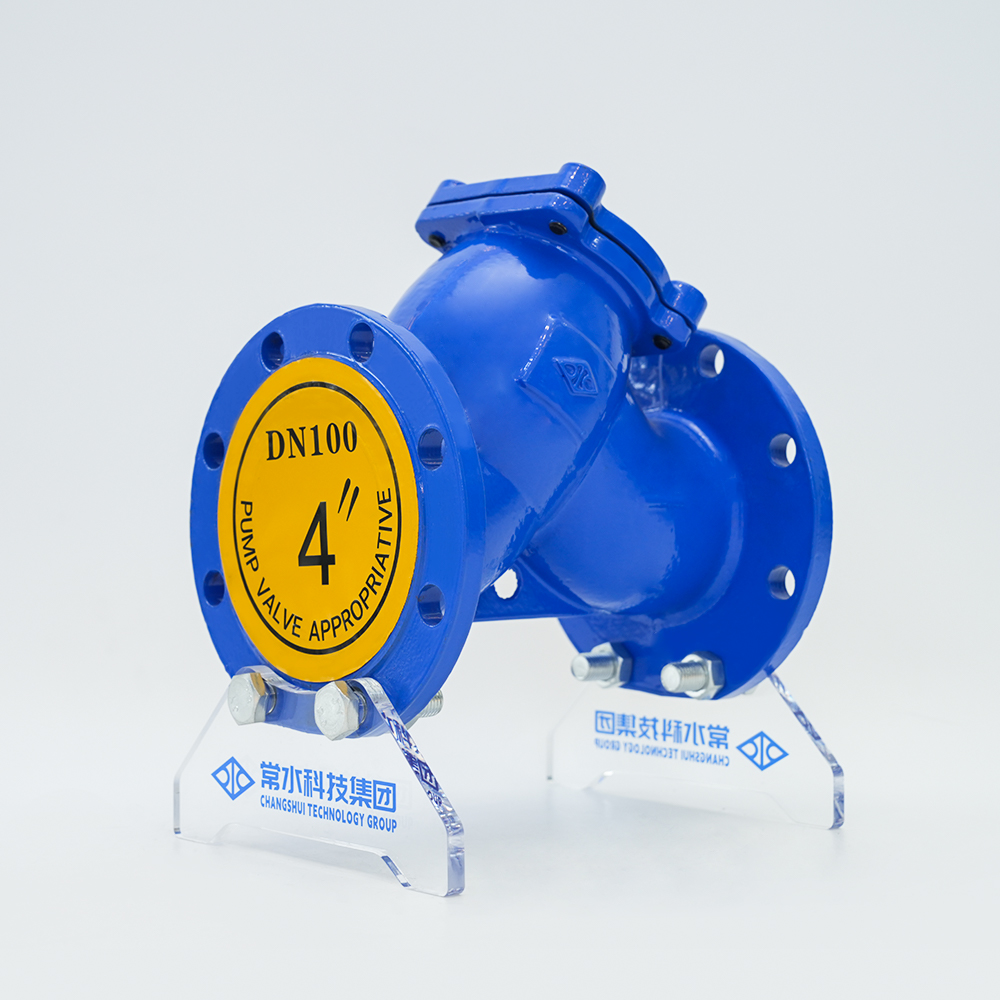
A swing check valve uses a hinged disc that swings open with forward flow and swings shut when flow reverses. This design is widely used because it is mechanically simple and, when fully open, can produce low pressure drop compared with more restrictive internals.
Where swing checks perform best
- Cooling water loops and general water distribution
- Large pipe diameters where headloss matters
- Stable flows with less frequent start/stop cycling
Practical cautions
Swing checks can close slowly after a pump stops; if reverse velocity builds before closure, you may see disc slam and pressure surges. If your system has fast transients, consider a spring-assisted or non-slam alternative.
Lift and piston check valves: strong sealing for higher pressure service
Lift checks use a guided disc that lifts off a seat with forward flow; piston checks are a close variant with a piston-like element. They tend to seal well and are common where tighter shutoff and higher-pressure operation are needed.
When lift/piston checks are a good fit
- High-pressure water and process lines with steady flow
- Locations requiring a more positive, guided closure
- Lines where flow is primarily horizontal (common configuration)
What to watch
These valves can be more sensitive to debris because the moving element and seat are closely fitted. In systems with rust, scale, or solids, a ball or diaphragm type of one way valve usually lasts longer with fewer nuisance leaks.
Ball check valves: reliable one way flow for dirty fluids
Ball check valves use a spherical ball that lifts or rolls away from the seat under forward flow and returns to seal under reverse flow. Because the sealing element is robust and tolerant of solids, this is one of the most practical types of one way valves for wastewater and dirty services.
Common applications
- Sewage ejector and sump discharge lines
- Slurry-like industrial waste streams
- Systems where occasional debris would damage a guided disc
A practical selection tip: if you can reasonably expect particles large enough to scratch a seat, a ball check often maintains function longer than a lift-style design.
Diaphragm check valves: quiet, debris-tolerant backflow prevention
Diaphragm check valves use a flexible elastomer diaphragm that opens under forward pressure and closes immediately when pressure drops or reverses. This construction is valued for low-noise, non-slam behavior and good tolerance to suspended solids.
Where diaphragm checks stand out
- Pumping systems prone to water hammer
- Corrosive fluids where metal-to-metal seating is undesirable
- Installations needing quieter operation (e.g., building services)
Lifecycle consideration
The diaphragm is a wear component. If the system has elevated temperatures or aggressive chemicals, confirm elastomer compatibility and plan inspection intervals based on operating hours and cycling frequency.
Dual-plate check valves: compact option for large lines
Dual-plate (double-door) check valves use two spring-assisted plates that open toward the center and close rapidly when flow slows. Their wafer-style body is compact, making them common in HVAC, water, and general industrial piping where space is limited.
Why they are frequently chosen
- Short face-to-face length simplifies retrofit work
- Faster closure reduces slam risk compared with many swing checks
- Good balance of headloss and closing performance in many water systems
Spring-loaded in-line check valves: fast closure to reduce water hammer
Spring-loaded in-line check valves use a spring to assist closure, so the valve shuts before significant reverse flow develops. If water hammer is a concern, this is often the most direct mitigation among the types of one way valves.
Key specification to understand: cracking pressure
The spring creates a minimum differential pressure required to open the valve (cracking pressure). In low-pressure systems, a high cracking pressure can become an avoidable energy penalty. A practical target is to choose the lowest cracking pressure that still achieves stable, non-chattering operation.
- Best for: pump discharge lines, pulsating flow, vertical runs
- Tradeoff: added spring force increases pressure drop
Foot valves: one way valves for pump suction lines
A foot valve is a one way valve installed at the end of a pump suction line, typically with an integrated strainer. Its primary purpose is to maintain pump prime by preventing the suction line from draining when the pump stops.
Selection and maintenance tips
- Choose a strainer mesh that blocks damaging debris without clogging rapidly.
- Account for added suction headloss; undersizing can starve the pump.
- If priming problems occur, inspect the seat and strainer first.
How to choose among types of one way valves in practice
A practical way to select a one way valve is to match it to the dominant risk in your system: debris, pressure drop, or transient surge. The following checklist helps avoid common mis-selections.
Selection checklist
- Fluid cleanliness: solids present favors ball or diaphragm; clean fluid supports swing, dual-plate, lift, or spring in-line.
- Transient behavior: rapid pump stops or valve slam risk favors spring-loaded or non-slam designs.
- Energy cost: where headloss is expensive, favor swing or dual-plate in larger sizes.
- Orientation: some designs are best in horizontal flow; verify whether your installation is vertical or angled.
- Maintenance access: if the line cannot be isolated easily, choose a more debris-tolerant type to reduce interventions.
If you can only apply one rule, use this: dirty fluid or solids → ball/diaphragm; water hammer risk → spring-loaded or non-slam; large clean water lines → swing/dual-plate.
Common sizing and installation mistakes to avoid
Many check valve issues come from application mismatch rather than manufacturing defects. The items below are frequent causes of noise, leakage, and premature wear.
- Oversizing the valve so the disc never stabilizes, leading to chattering and seat damage.
- Installing a debris-sensitive lift/piston check in a line with scale, rust, or solids.
- Placing a slow-closing swing check immediately downstream of a pump without considering surge behavior.
- Ignoring cracking pressure in low-pressure systems, causing avoidable headloss.
- Skipping access provisions (unions, flanges, isolation valves) that make maintenance impractical.
Conclusion: selecting the right type of one way valve
The best choice among the types of one way valves is the one that matches your fluid condition and transient risk: ball or diaphragm for solids, spring-loaded in-line for rapid closure and surge control, and swing or dual-plate for efficient flow in larger clean-water lines. Using this mapping prevents backflow while minimizing headloss, noise, and maintenance.